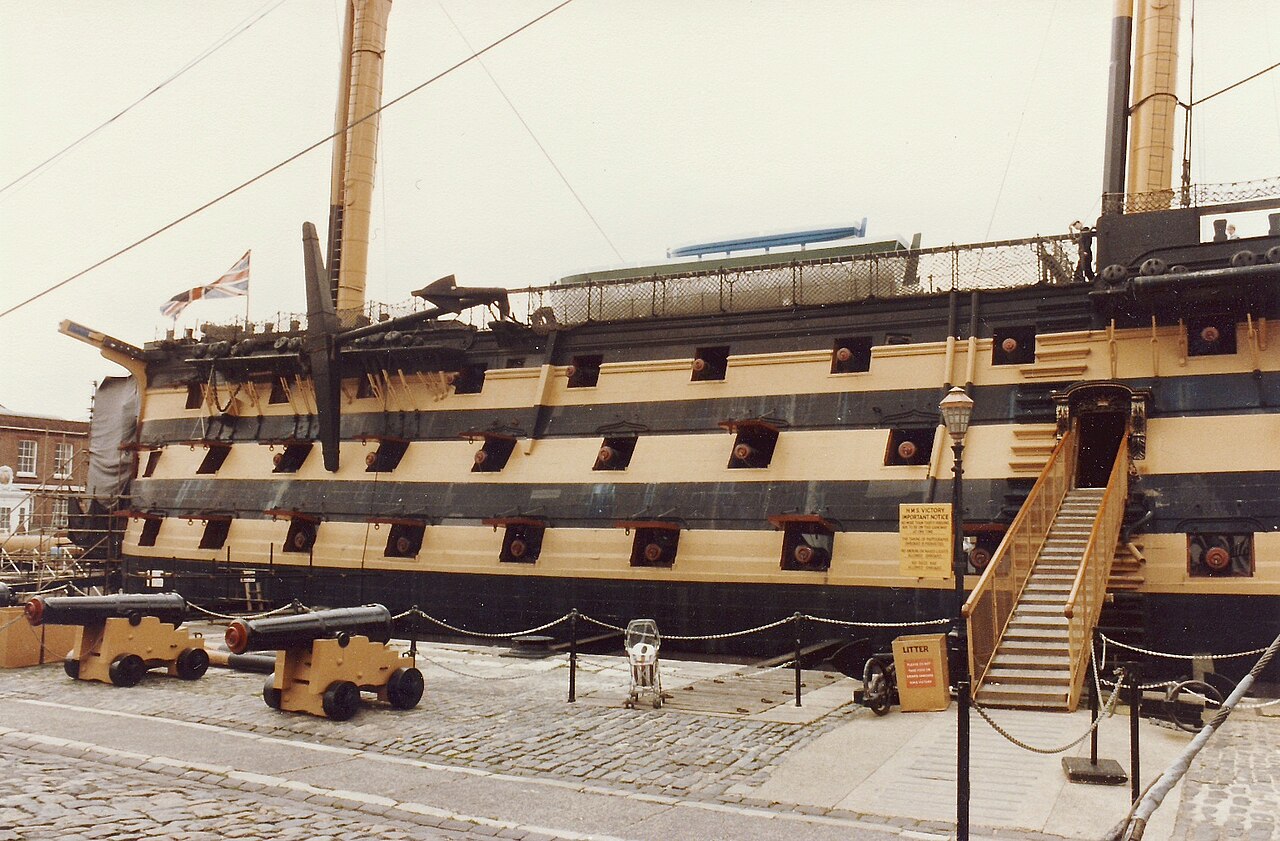
There’s no ship in the world quite like her. HMS Victory led the fleet at the Battle of Trafalgar, carried Nelson home after he was killed, and has been part of Portsmouth for more than a century. She’s over 260 years old, and she’s still a commissioned ship in the Royal Navy.
Here’s her story, some facts that’ll impress your mates, and my tips for visiting her at the Historic Dockyard.
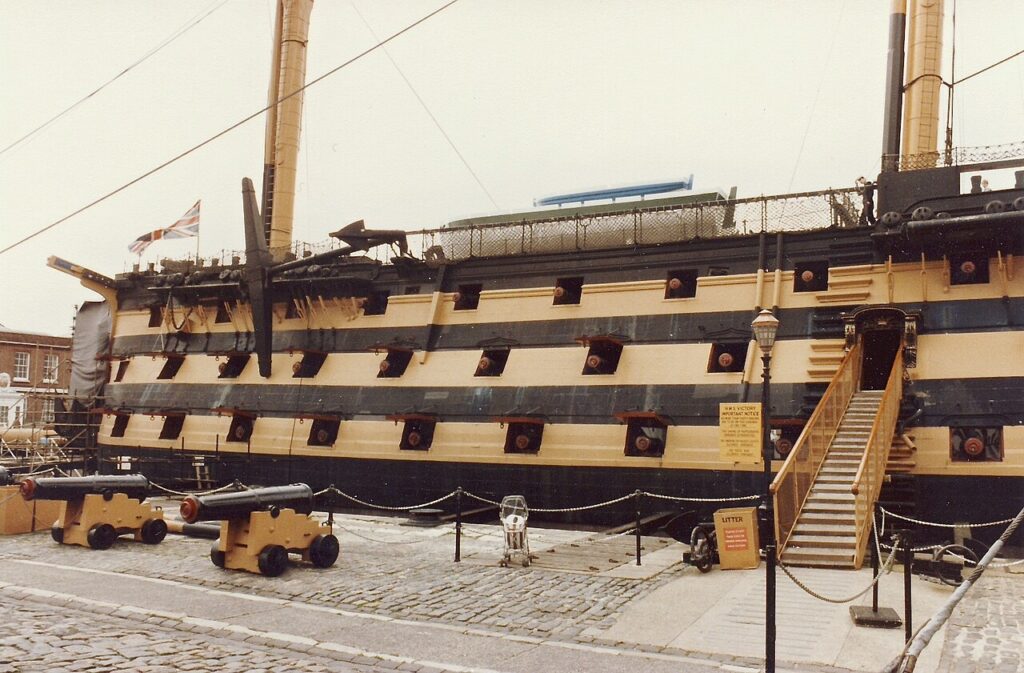
Built in Kent, launched in 1765
Victory’s story starts in Chatham, where work began in 1759, during the Seven Years’ War, to a design by Sir Thomas Slade. She was launched on 7th May 1765.
She was a huge undertaking. The National Museum of the Royal Navy says around 6,000 trees went into building her, and she cost £63,000, which it puts at roughly £740 million in today’s money. She’s 227 feet long and her rigging needs 26 miles of rope and 768 pulley blocks.
Funnily enough, the war was over by the time she was finished, so she spent her first thirteen years in reserve. She was finally commissioned in March 1778 for the War of American Independence.
Nelson and the Battle of Trafalgar
The moment that made HMS Victory famous came on 21st October 1805, off Cape Trafalgar. She was Vice Admiral Lord Nelson’s flagship, leading the British fleet against the combined fleets of France and Spain.
Before the battle, Nelson sent the most famous signal in naval history: “England expects that every man will do his duty.” Victory carried 821 men that day.
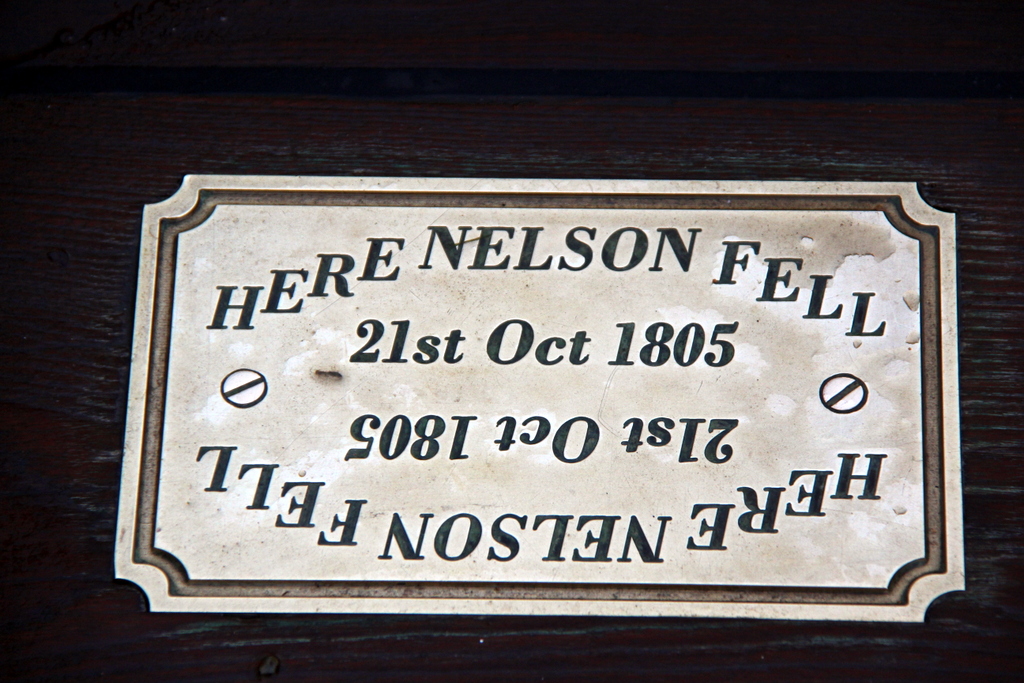
The British won a decisive victory, but at a terrible cost. As Nelson walked the quarterdeck, he was shot by a marksman on the French ship Redoutable. He was carried below and died later that afternoon. On Victory, 51 men were killed in the battle, 11 more later died of their wounds, and 91 were wounded and survived.
Victory herself was badly damaged. She carried Nelson’s body home, preserved in a barrel of brandy.
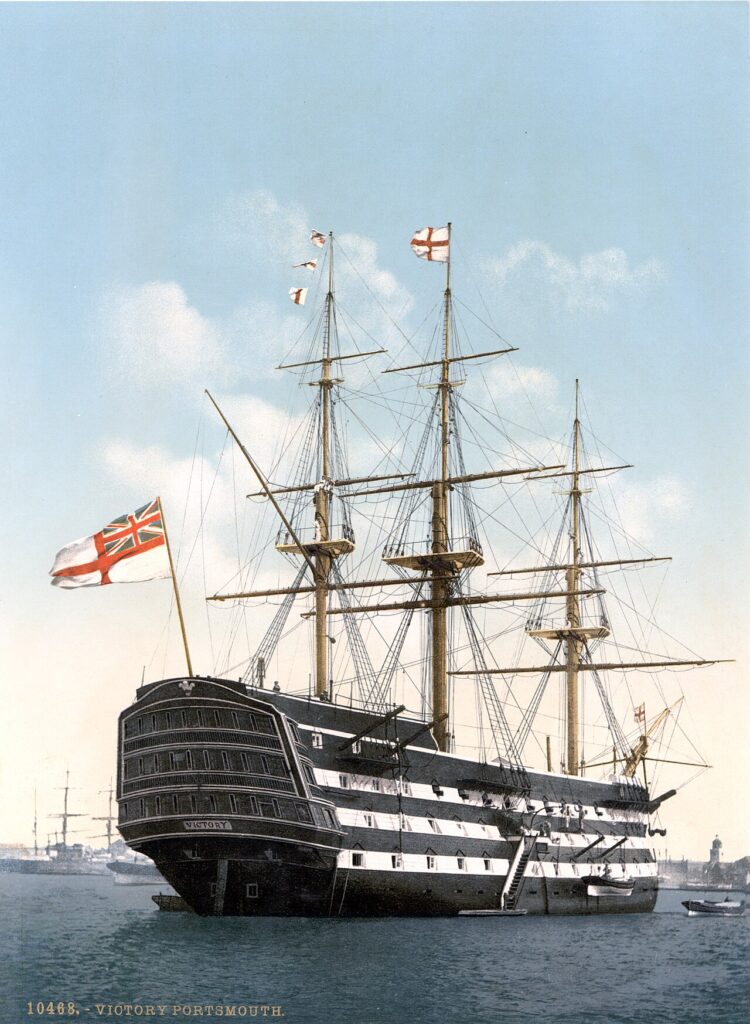
Coming home to Portsmouth
After her fighting days, Victory became a tourist attraction surprisingly early. The museum says people were already visiting her in the 1810s, more than a hundred years before she officially opened to the public.
In 1922 she was moved into dry dock at Portsmouth, where she still sits today, and on 17th July 1928 King George V reopened her to the public. More than 30 million people have visited since.
She survived the Second World War too, just. On 10th March 1941, during the bombing of Portsmouth, a 250kg bomb fell between the ship’s side and the dry dock wall, destroying two of her support cradles and a 15 foot section of her keel. You can read more about that time in my Portsmouth Guildhall history, which tells the story of the Blitz in our city.
HMS Victory facts
A few of my favourites, mostly from the National Museum of the Royal Navy:
- She’s the oldest commissioned warship in the world.
- She’s still the flagship of the First Sea Lord, the head of the Royal Navy.
- She carried 104 guns.
- She’s had five major repairs since 1765, and she’d been almost completely rebuilt by the time of Trafalgar.
- She displaces around 3,500 tons.
- In 2012 she passed to a preservation trust that’s part of the National Museum of the Royal Navy.
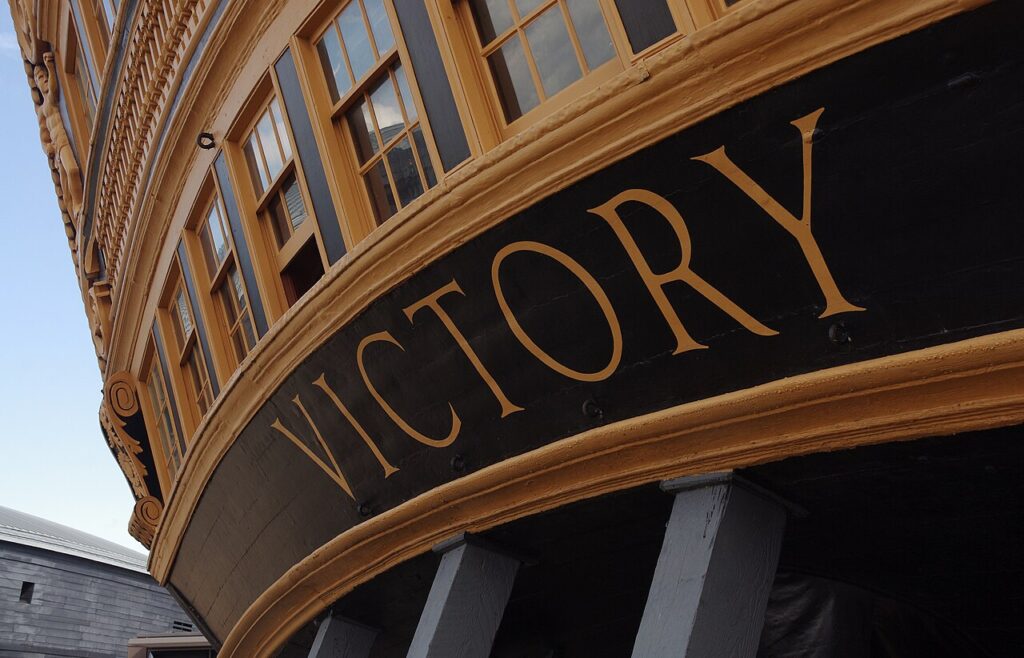
Visiting HMS Victory
Victory is the star of Portsmouth Historic Dockyard, and walking her decks is something everyone should do at least once. Look out for:
- The gun decks: rows of cannon on low wooden decks. Mind your head, these were built for 18th century sailors.
- The spot where Nelson fell: a plaque on the deck marks the place he was shot.
- The cockpit: down below, where Nelson died. It’s a really moving spot.
- The Great Cabin: where Nelson lived, worked and planned.
She’s in the middle of a major conservation project, so you’ll see scaffolding around her, but she’s still open and you can watch the shipwrights at work. Allow 60 to 90 minutes. My Portsmouth Historic Dockyard guide covers tickets, prices and what else is included, from the Mary Rose to HMS Warrior.
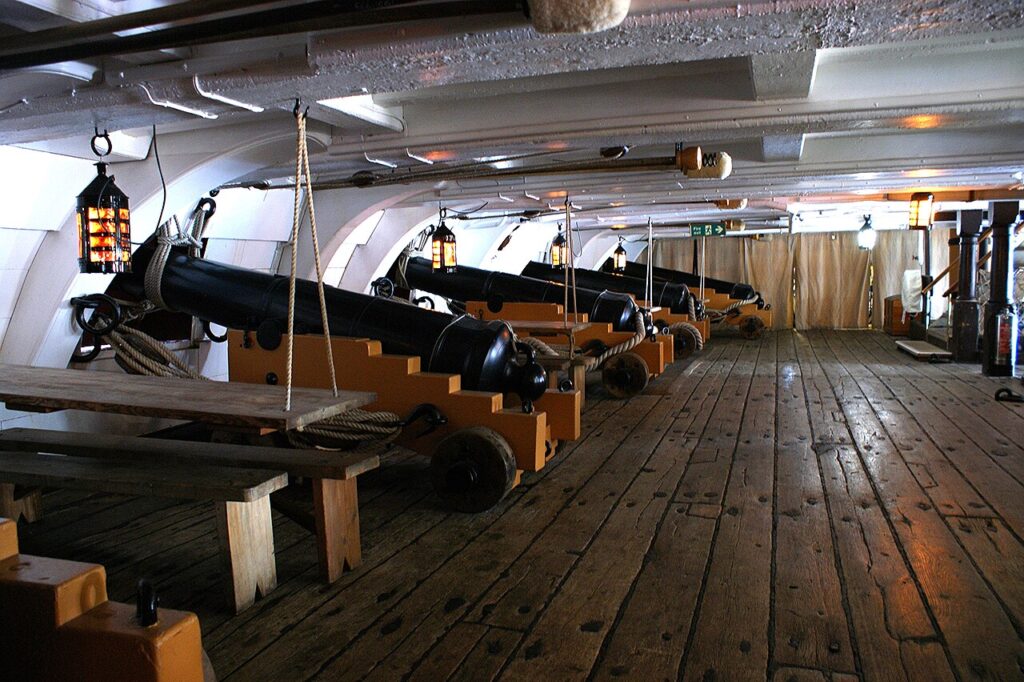
Make a day of it
The Dockyard is right next to Portsmouth Harbour station and a short walk from Gunwharf Quays and Old Portsmouth. If you love naval history, don’t miss my Mary Rose history and my Portsmouth D-Day history too, and for more ideas see my guide to things to do in Portsmouth.
Why HMS Victory matters to Pompey
We’re a Navy city through and through, and she’s at the heart of that. She’s survived battles, storms, rot and bombs, and she’s still here, still in commission and still drawing visitors from all over the world. Every time I see her masts over the Dockyard wall, I feel proud to be from Pompey 💙⚓
Sources: National Museum of the Royal Navy: facts, Royal Museums Greenwich, World History Encyclopedia and Wikipedia.