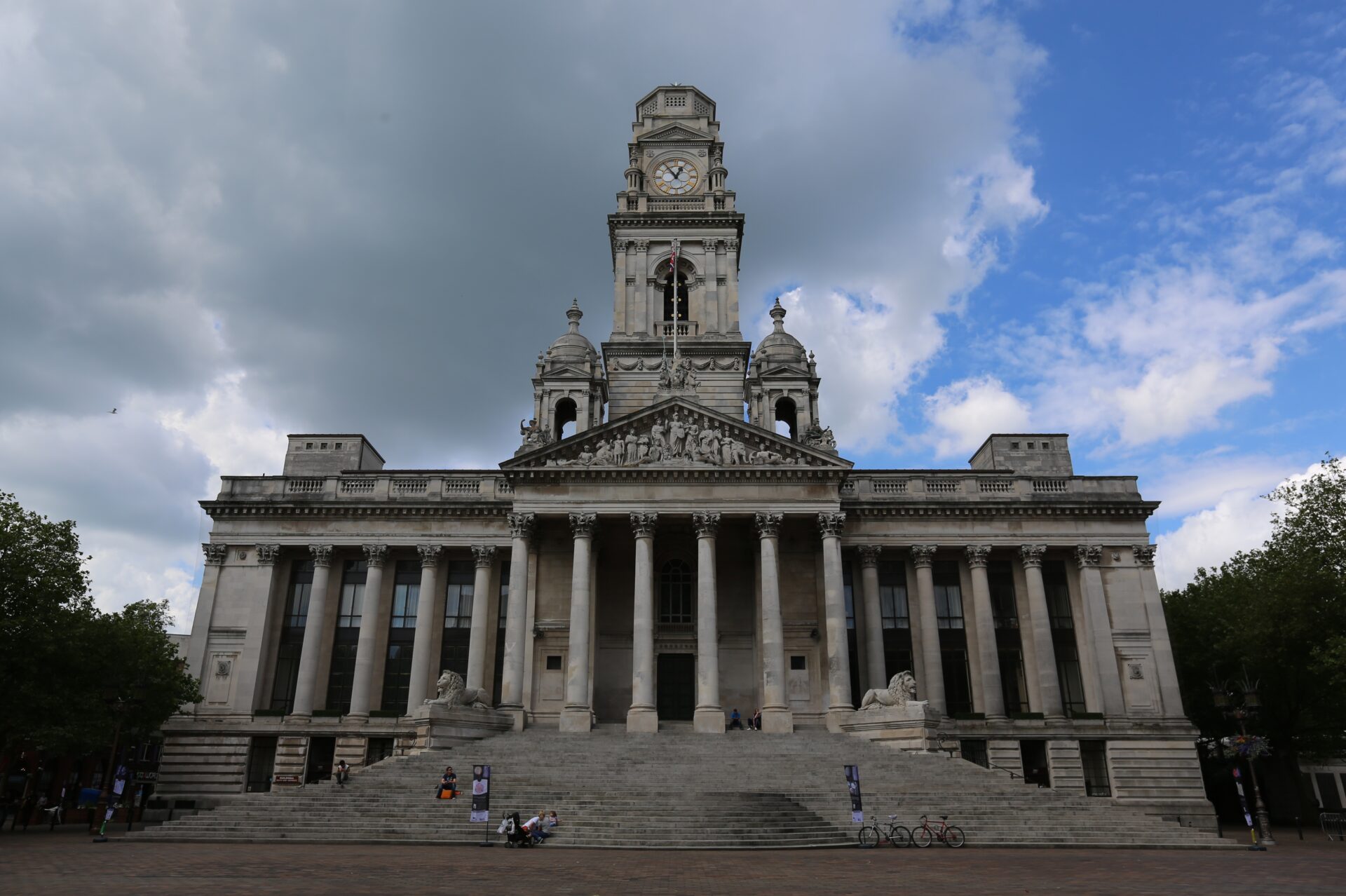
Every Pompey kid knows the Guildhall. It’s where you saw your first proper gig, sat through a school prizegiving or met your mates by the lions on the steps. But how many of us actually know the story behind it? Portsmouth Guildhall history is a proper rollercoaster: a grand Victorian town hall, a new name when we became a city, a night of fire in the Blitz and a comeback that the Queen herself turned up for.
So grab a cuppa, because here’s the story of the building at the heart of our city, from its Victorian beginnings to the concerts packing it out today.
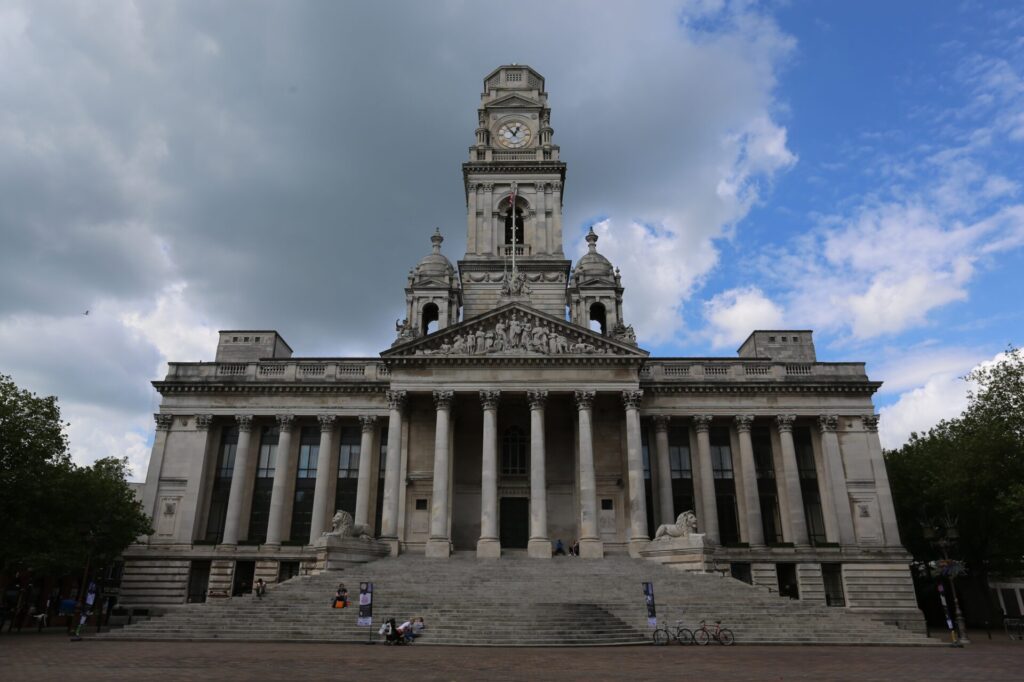
A Victorian town hall fit for a growing town
By the 1880s Portsmouth was booming on the back of the Dockyard, and the town wanted a town hall to match. The foundation stone was laid on 14 October 1886 by the Mayor, Alfred Starling Blake.
The architect was William Hill from Leeds, who had already designed the almost identical Bolton Town Hall in 1873. According to the Guildhall itself, Hill was keen to improve on his Bolton design, and Pompey got the upgrade. Cheers, Bill.
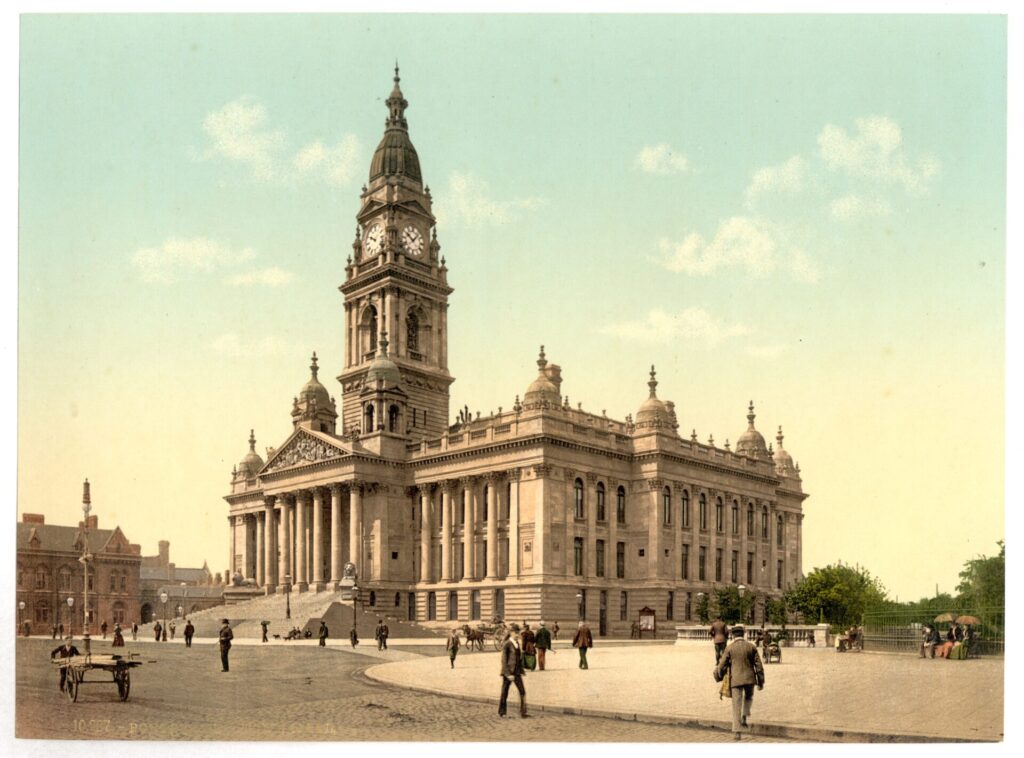
The building was officially opened on 9 August 1890 by the Prince and Princess of Wales. Back then it wasn’t called the Guildhall at all. It was simply Portsmouth Town Hall, and it had a much taller, fancier tower than the one we know today.
The Pompey Chimes
Up in that tower sit five bells, known as the Pompey Chimes, cast by Mears and Stainbank in 1889. The biggest, Victoria, named after the Queen of the day, weighs about four tons.
Yes, the same Pompey Chimes we sing at Fratton Park. The chimes fell silent in 2003 because sea salt had corroded the mechanism, but they were restored in time for the Queen’s visit in 2009. If you’re in Guildhall Square on the hour, have a listen.
From Town Hall to Guildhall
On 21 April 1926, Portsmouth was granted city status, and the Town Hall was renamed the Guildhall. It’s a key date in the building’s story, and exactly the milestone the city has been celebrating this year with Portsmouth100, so the building has been part of our story as a city from day one.
Portsmouth Guildhall history and the Blitz
Then came the darkest night in the building’s life. On 10 January 1941, during one of the heaviest raids of the Portsmouth Blitz, incendiary bombs hit the Guildhall. The fire destroyed the roof and the entire interior. Only the outer walls and the tower were left standing, badly scorched.
For a city that took such a battering in the war, seeing its proudest building reduced to a burnt out shell must have been heartbreaking.
Rebuilt and reopened by the Queen
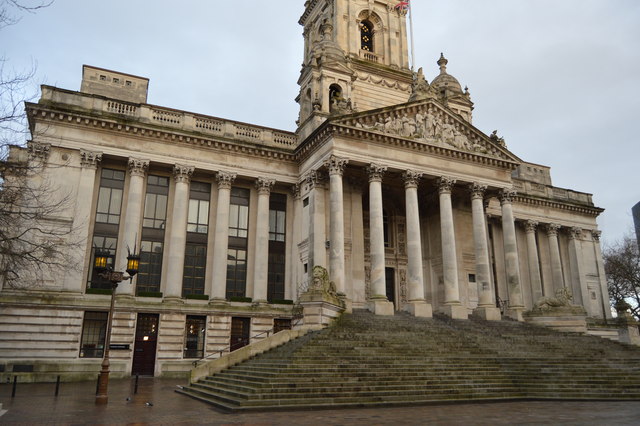
Rebuilding started in 1955. The architect was Ernest Berry Webber, and the work took four years and cost £1.5 million.
If you’ve ever wondered why the Guildhall looks plainer than old photos, that’s why. The rebuilt tower is simpler than the Victorian original, and the inside was completely redesigned.
On 8 June 1959, Queen Elizabeth II, with the Duke of Edinburgh, reopened the Guildhall. The courts that used to sit there moved to the new Law Courts in 1960, and the building became the civic, concert and events venue we know today. It was Grade II listed on 25 September 1972.
Around it, Guildhall Square was laid out as a pedestrian square in the 1970s, and the Civic Offices were finished next door in 1976. Love them or hate them, they’ve framed the Guildhall ever since.
Legends on the Guildhall stage
This is where Portsmouth Guildhall history gets really fun. The Beatles played here twice in 1963. In 1972, according to the venue, Pink Floyd played Dark Side of the Moon there in full for the first time. Jimi Hendrix, The Supremes and The Rolling Stones have all graced the stage too.
Today the main hall holds up to 2,500 people standing, and it’s still the city’s main concert venue. I’ve covered more of the gig history in my guide to live music in Portsmouth.
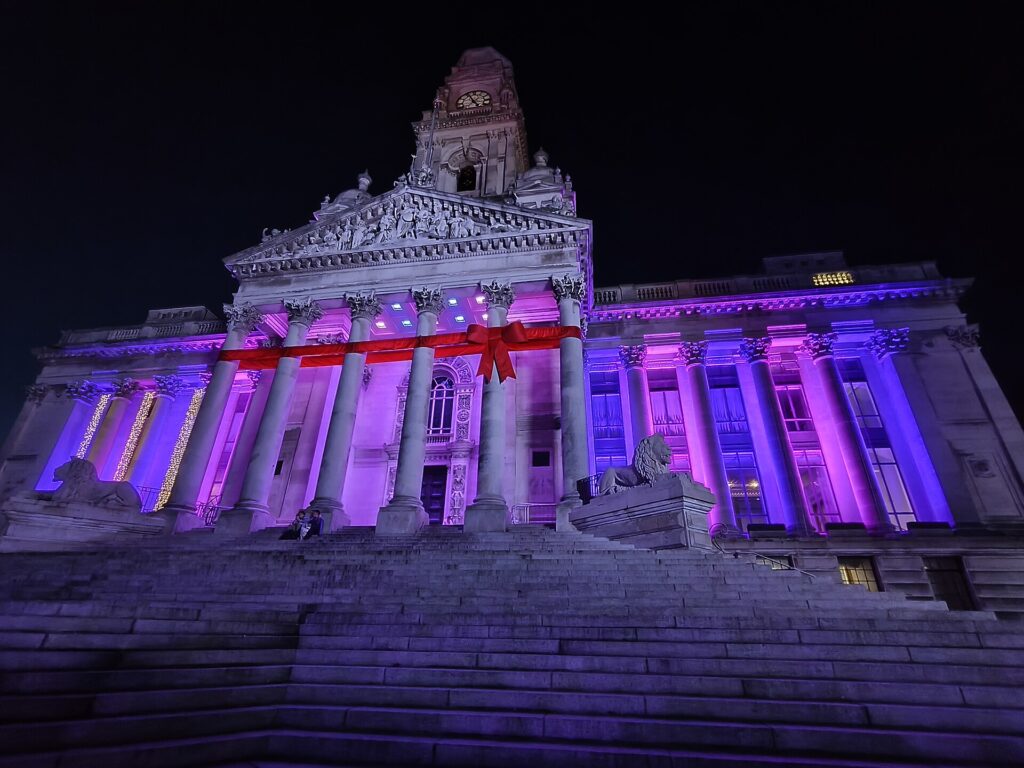
The Guildhall today
Since 2011 the Guildhall has been run by the Guildhall Trust, a registered charity. As well as concerts, comedy and shows, it hosts weddings, conferences and civic events, and it’s home to the Council Chamber and the city’s Civic Plate.
It’s also right at the centre of so much of what’s on in Pompey, from big tours to Christmas shows. If you want to see who’s playing, everything at the Guildhall goes on my free What’s On Pompey calendar.
That’s Portsmouth Guildhall history in a nutshell, and not bad for a building that was a burnt out shell in 1941. Next time you walk up those steps, give the old girl a nod 💙⚓
Sources: Portsmouth Guildhall: Guildhall history and Wikipedia: Portsmouth Guildhall.