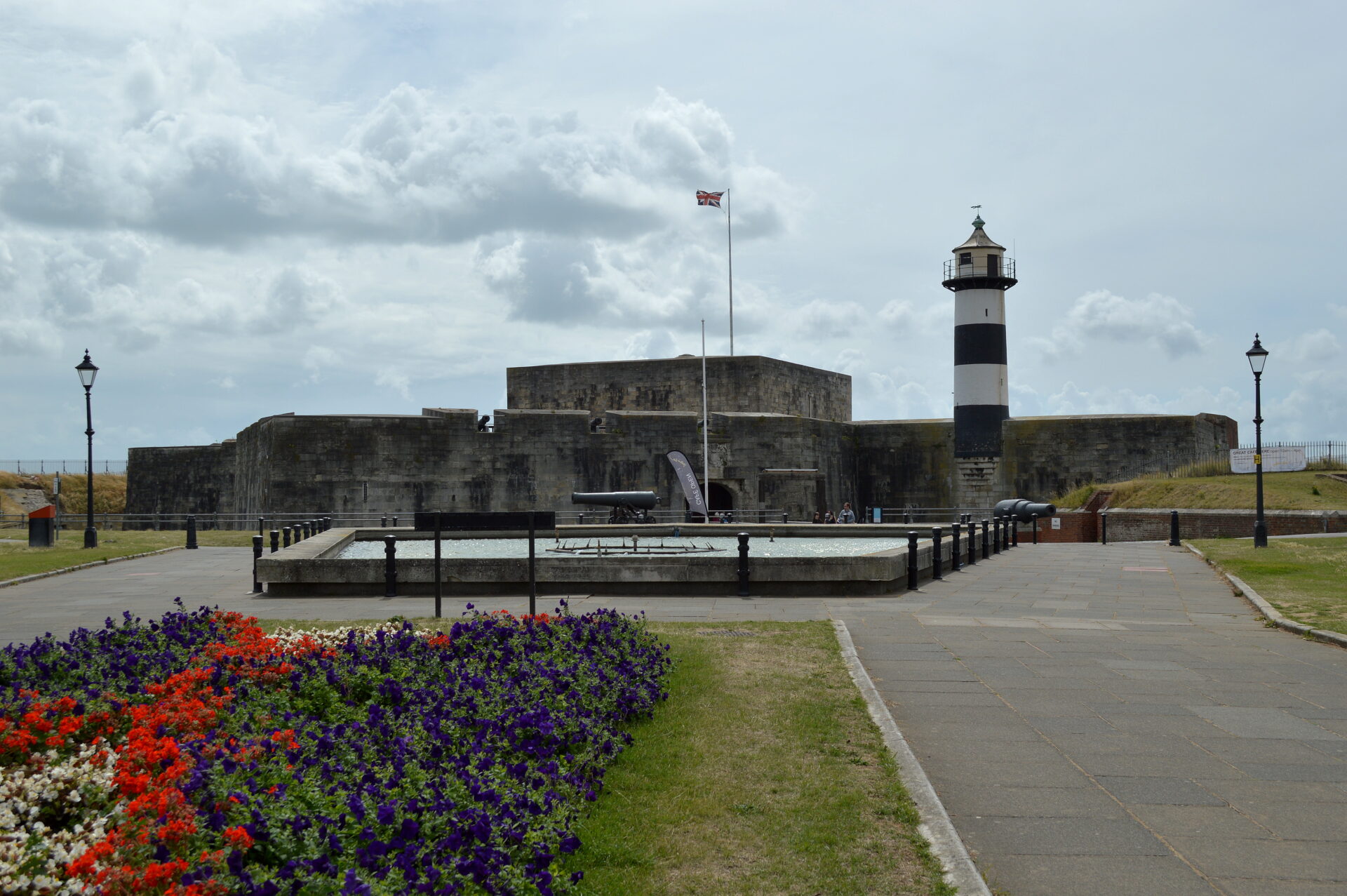
You’ve probably walked past it a hundred times on the way to the beach. That squat stone fort with the black and white lighthouse, sat between the Common and the sea. But Southsea Castle history is packed with drama: built in a hurry for Henry VIII, a front row seat for the sinking of the Mary Rose, captured in the Civil War, blown up by accident and guarding Pompey right through to the Second World War.
Here’s the story of the castle that gave Southsea its name.
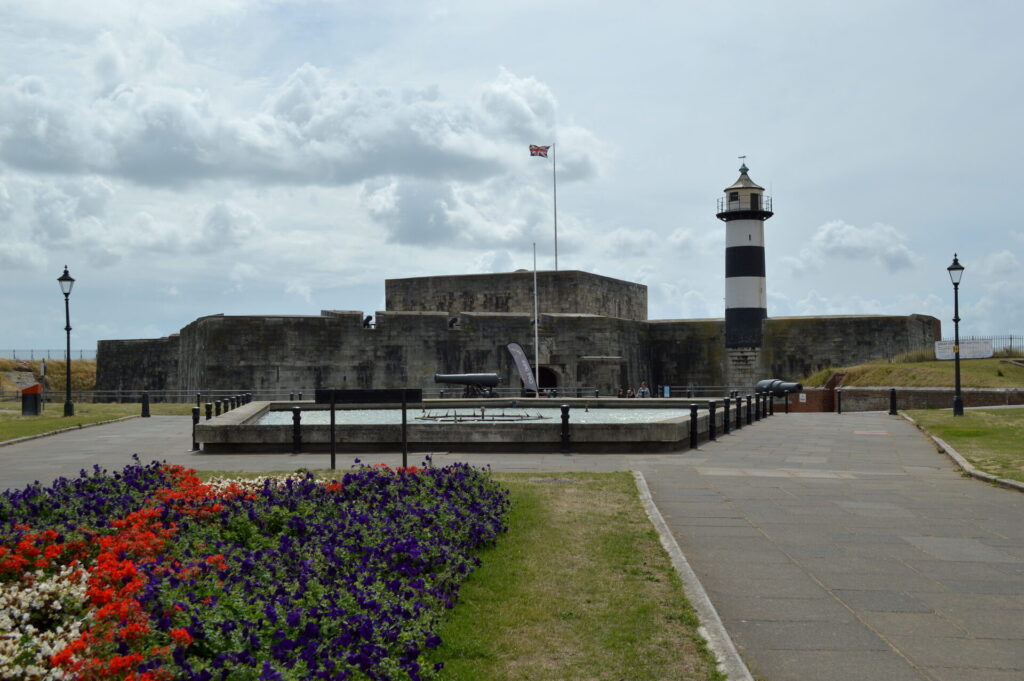
Built in six months for Henry VIII
In the 1540s Henry VIII was worried. England was under threat from France and the Holy Roman Empire, and an invasion felt very real. So he ordered a chain of new artillery forts along the south coast, often called the Device Forts.
Work on Southsea Castle started in early 1544 under Sir Anthony Knyvett, and it was finished by October that year. Visit Portsmouth says it was paid for partly with money from selling off monastery land. It was placed to guard the deep water channel into Portsmouth Harbour, where ships had to pass closest to the shore.
The design was cutting edge for its day: a square central keep, rectangular gun platforms east and west, and angled bastions front and back. Round medieval towers were too easy to knock down with cannon, so this was England trying out a newer, angular style from the continent.
Fun fact for the pub quiz: according to Visit Portsmouth, the castle is the earliest record of the name “Southsea”. So without the castle, no Southsea. Think about that next time you’re on Palmerston Road.
Southsea Castle history and the Mary Rose
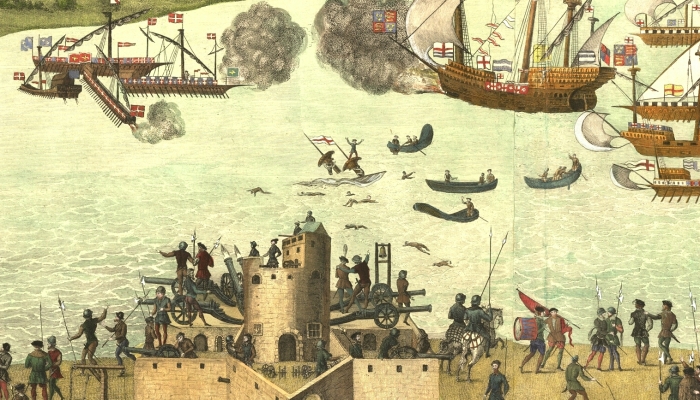
Just a year later, in July 1545, a huge French fleet sailed into the Solent. In what became known as the Battle of the Solent, Henry VIII’s flagship, the Mary Rose, sank on 19 July 1545, and the Mary Rose Trust says Henry watched it happen from Southsea Castle.
The castle itself didn’t take part in the fighting, but it gave the King and his army a grandstand view. The scene was later recorded in the famous Cowdray engraving, which shows the castle, the ships and the masts of the sinking Mary Rose. You can read the full story of the ship in my Mary Rose history guide.
Captured in the Civil War
Fast forward almost 100 years to one of the oddest chapters of Southsea Castle history: the English Civil War. In 1642 the castle was held for the King by a Royalist, Captain Challoner, with just 11 men and 14 guns. On 5 September, Parliamentarian Colonel Richard Norton attacked with around 400 infantry.
After a second assault, the garrison surrendered without anyone being killed, and Portsmouth soon surrendered too. Not exactly a last stand, but probably the sensible call.
An explosion and a rebuild
The castle’s worst day wasn’t in battle at all. In August 1759, sparks from cooking set off gunpowder stored by the 72nd Regiment of Foot. The blast badly damaged the east side and killed 17 people.
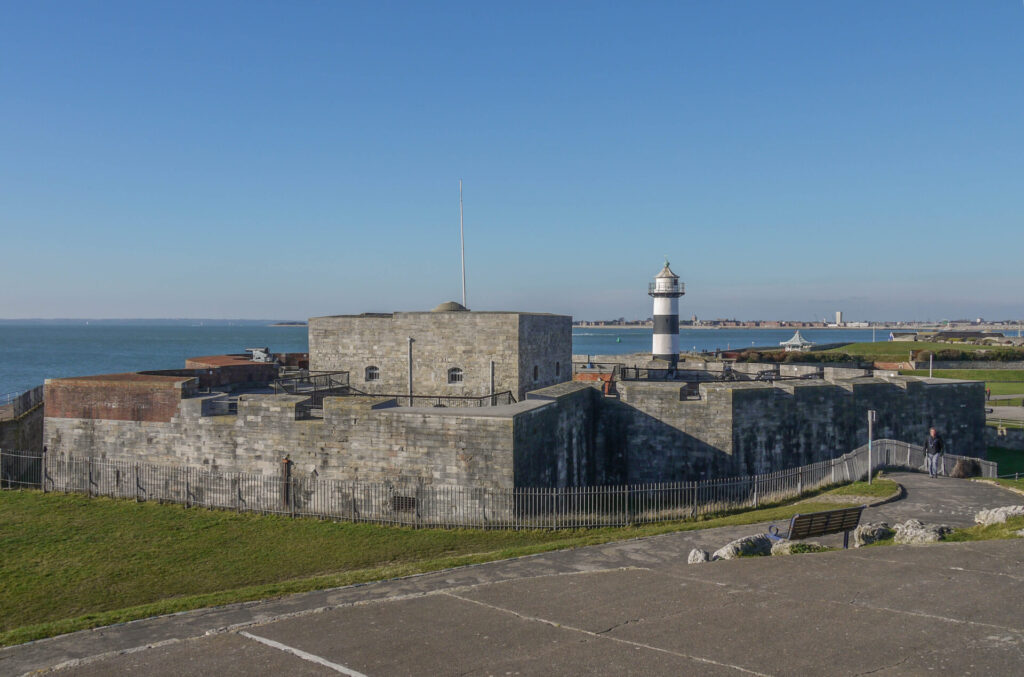
In the early 1800s, under Major-General Benjamin Fisher, the castle was extended to the north, and the keep and the inside were rebuilt in brick, with most of the work finished by 1814. In 1828 the Admiralty added the lighthouse on the western gun platform. It was made taller in 1854 and kept working until 2017.
The castle was even used as a military prison for a while, and between 1863 and 1869 new gun batteries with underground magazines were added on the east and west sides.
Still on guard in the Second World War
One of my favourite bits of Southsea Castle history is how long it stayed useful. Amazingly, a fort built for Henry VIII was still in military use in the 20th century. During the Second World War the castle was garrisoned and served as the headquarters of Portsmouth’s fixed defences.
By 1960 it was finally obsolete, and Portsmouth City Council bought it for £35,000. The council restored it to how it looked before 1850 and opened it as a museum in 1967. Today it’s a Scheduled Ancient Monument.
Visiting Southsea Castle today
These days the castle is one of the best spots on the seafront to soak up a bit of Pompey’s past, with the ramparts giving you cracking views over the Solent towards the Isle of Wight. It’s also a brilliant backdrop for events, and the lighthouse looked stunning lit up for Portsmouth100.
Opening times change through the year, so check before you go. It’s an easy add on to a seafront walk, and my Southsea guide has plenty more to do nearby. Keep an eye on my What’s On Pompey calendar for events at the castle too.
So next time you stroll past, remember: that’s where Southsea Castle history began, and where the name Southsea started. Not bad for a fort thrown up in six months 💙⚓
Sources: Mary Rose Trust: Southsea Castle, Visit Portsmouth: Southsea Castle and Wikipedia: Southsea Castle.