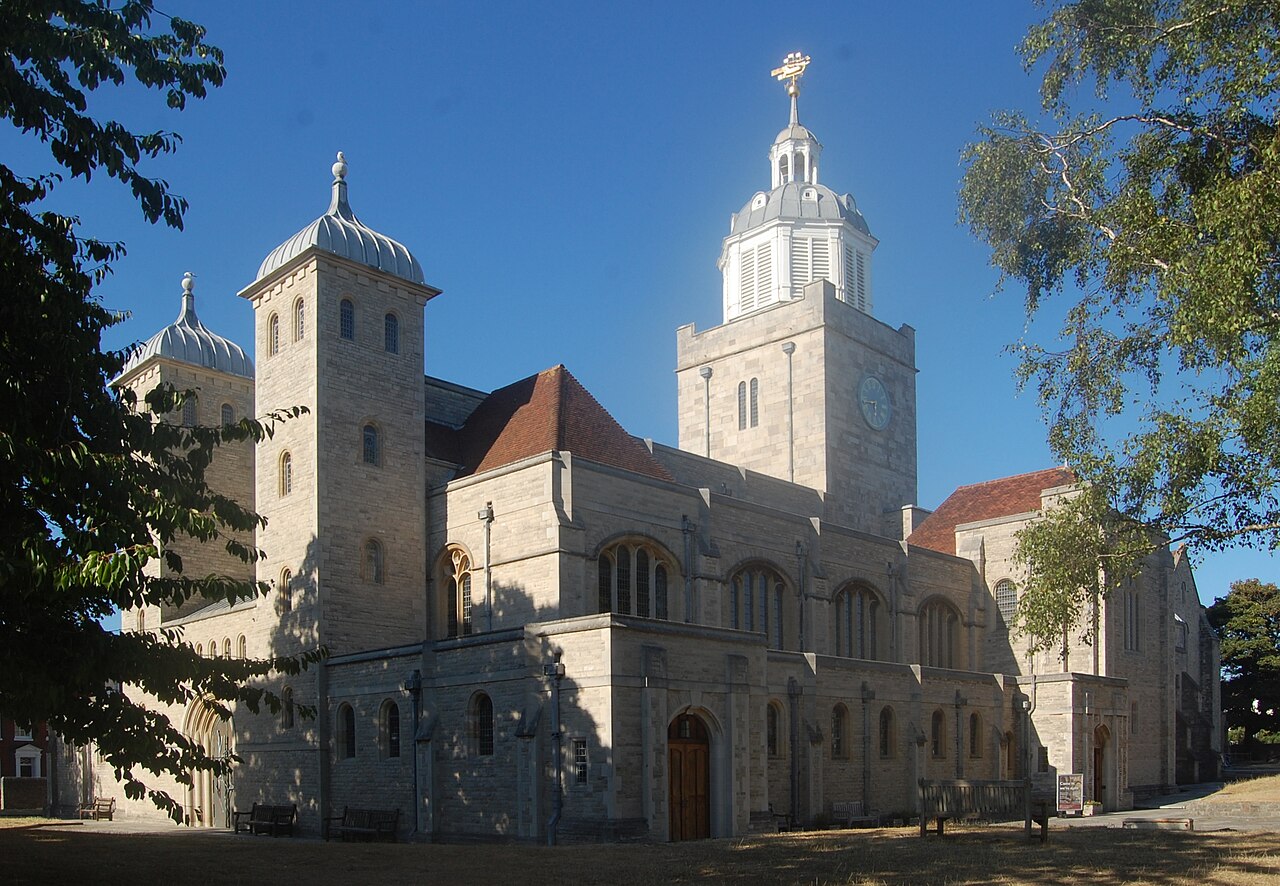
Tucked away on the High Street in Old Portsmouth, with a white cupola that sailors have used to guide them home for centuries, Portsmouth Cathedral is one of the most interesting buildings in the city. It started life as a small chapel in the 12th century, survived a Civil War siege and was only finally finished in 1991.
Here’s its story, and what to look out for when you visit.
A chapel for Thomas Becket
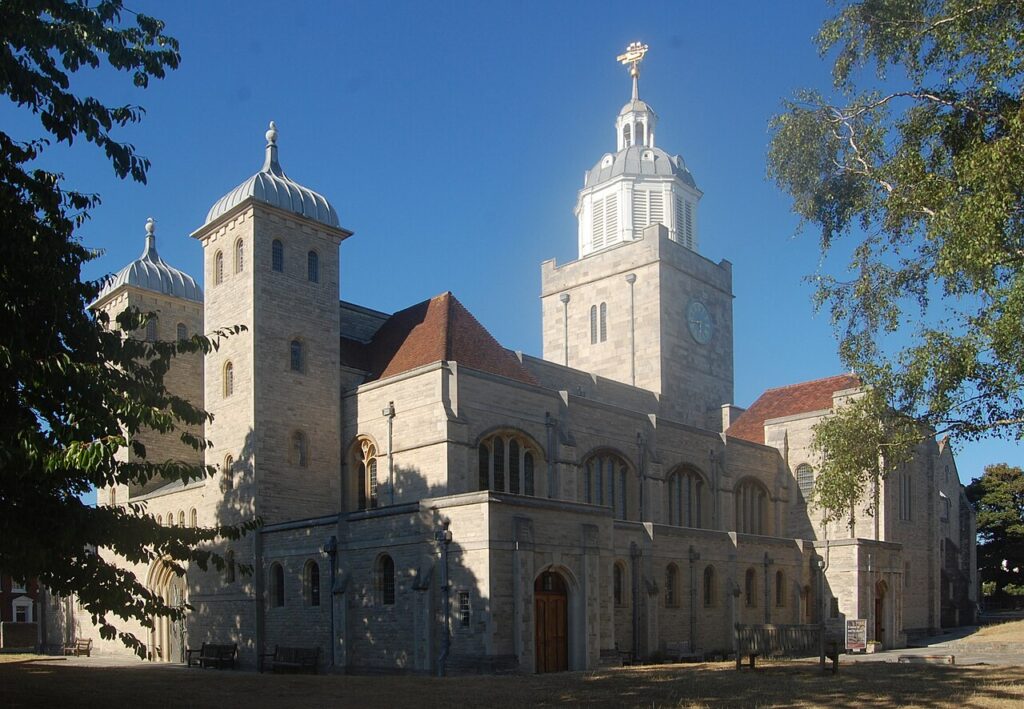
The story begins around 1180, when a Norman merchant called Jean de Gisors gave land to a group of Augustinian canons so they could build a chapel “to the Glorious Honour of the Martyr Thomas of Canterbury”.
That’s Thomas Becket, the Archbishop of Canterbury who was murdered in his own cathedral in 1170. The chapel was dedicated to him in 1188, and the cathedral is still dedicated to St Thomas of Canterbury today. Look closely at the stained glass and you’ll find scenes from his martyrdom.
Long before it was Portsmouth Cathedral, it became the town’s parish church, and it had some famous visitors. Elizabeth I worshipped here in 1591.
Shot at in the Civil War
In 1642, during the Civil War, Portsmouth was held by the Royalists, who used the church tower as a lookout. Parliamentary gunners across the harbour in Gosport opened fire on it, and the damage ruined the medieval tower and nave.
Rebuilding had to wait until after the Restoration. Between 1683 and 1693, Charles II authorised a nationwide collection to pay for a new tower and nave in the classical style.
The cupola and lantern
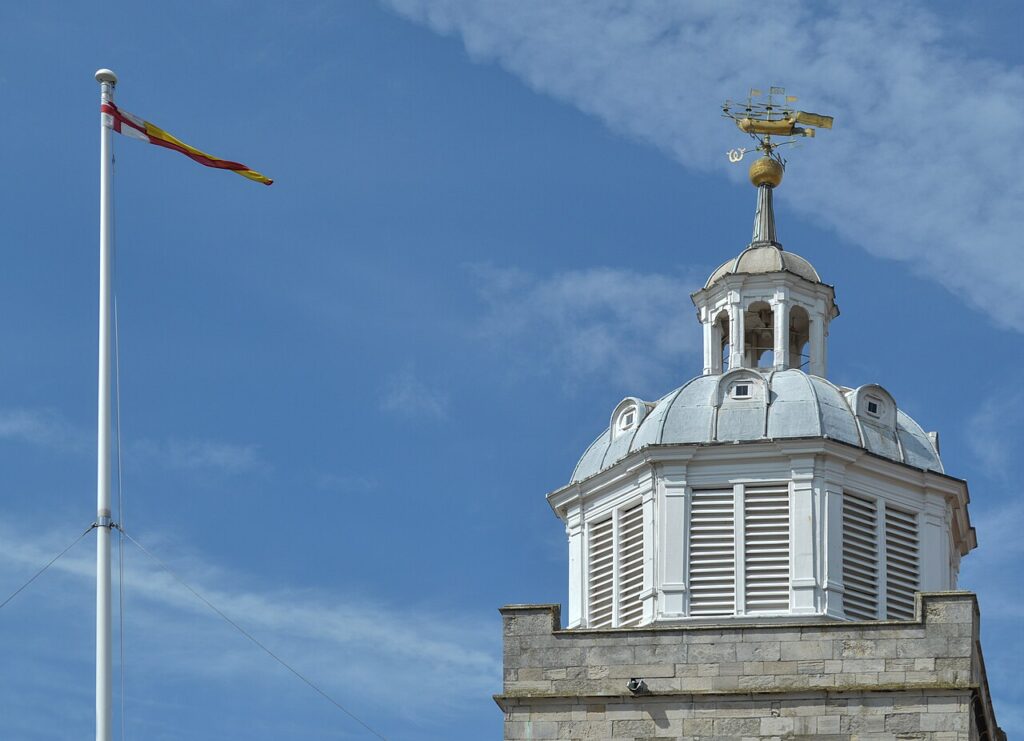
In 1703 the church got its most famous feature: a wooden cupola on top of the tower, with a lantern to help ships find their way into the harbour. A ring of eight bells was added at the same time. It’s known as the Cathedral of the Sea, and you can still see the cupola from all over Old Portsmouth and the harbour.
From church to Portsmouth Cathedral
In 1927 the new Diocese of Portsmouth was created, and on 1st May that year St Thomas’s became its pro-cathedral. By 1935 the “pro” had been dropped, and it was simply the cathedral. Plans followed to make the building bigger, with an extension designed by Charles Nicholson.
Then the Second World War got in the way. Work stopped after the Fall of France in June 1940, and a “temporary” brick wall was put up to close off the unfinished nave. That temporary wall stayed in place for half a century.
Work finally started again in January 1990, and the completed cathedral was consecrated in November 1991, in the presence of Queen Elizabeth the Queen Mother. So while its roots go back over 800 years, Portsmouth Cathedral was only finished in my lifetime.
What to see inside
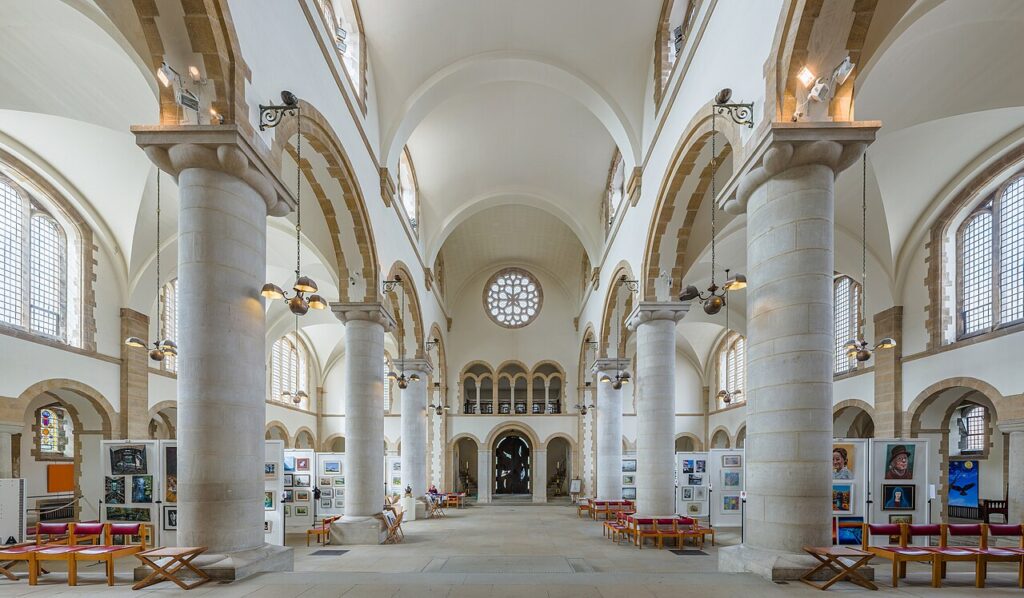
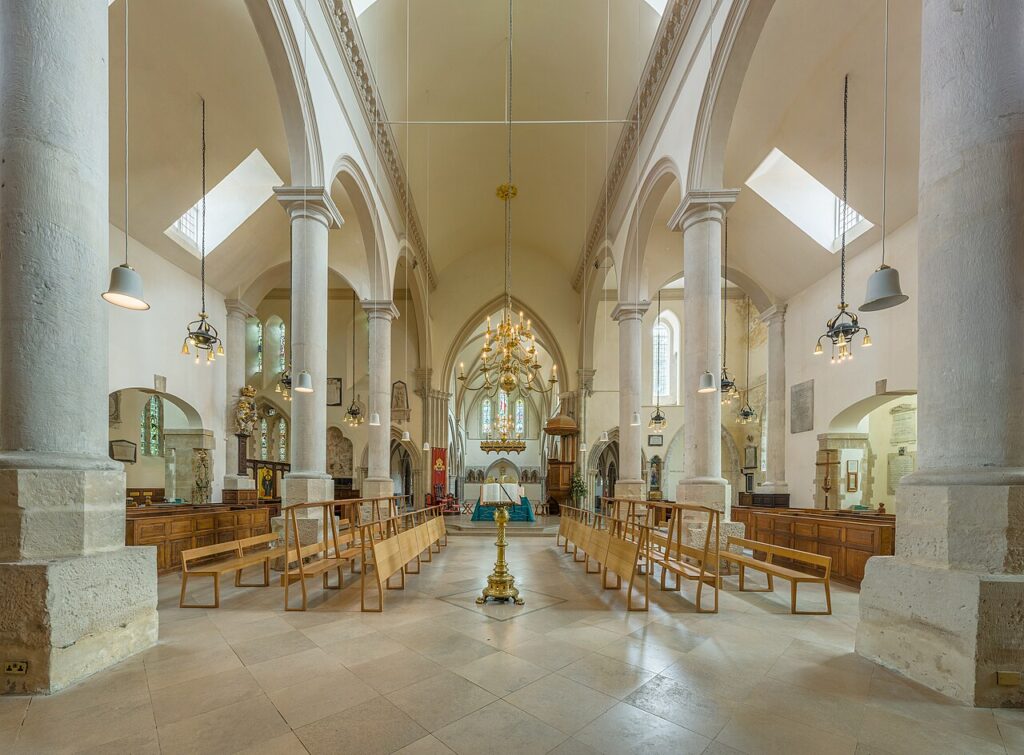
It’s a really peaceful place to wander round, and it’s full of stories. Don’t miss:
- The grave of an unknown Mary Rose sailor: one of the crew of Henry VIII’s warship, which sank in the Solent in 1545. Read more in my Mary Rose history.
- Remnants of Nelson’s flag from HMS Victory: a link to Pompey’s most famous ship. My HMS Victory guide tells her story.
- The stained glass: windows showing events from Becket’s martyrdom right through to D-Day.
- The organs: a three-manual organ installed in 1994 and the West Great Organ, added in 2001.
- Secret staircases: ask about them on a tour.
Visiting the cathedral
The cathedral is open daily, and there are daily guided tours, plus audio tours you can follow on your phone. Check the cathedral’s website for times, services and events. It also hosts concerts throughout the year, so keep an eye on my What’s On Pompey calendar too.
The cathedral sits on the High Street, a short walk from Portsmouth Harbour station and Gunwharf Quays. It’s the perfect starting point for my Old Portsmouth walking guide, which takes you down to the Square Tower, the Hotwalls and the Round Tower, and finishes at the pub. Speaking of which, my Old Portsmouth pubs guide tells you where to go.
Why it’s worth a visit
From Becket and the Civil War to the Mary Rose and Nelson, so much of Pompey’s history is tied up in this one building. Whether you’re religious or not, it’s a beautiful, calm spot in the middle of the old town, and well worth half an hour of your day. For more ideas, see my guide to things to do in Portsmouth 💙⚓
Sources: Wikipedia and the cathedral’s own website.