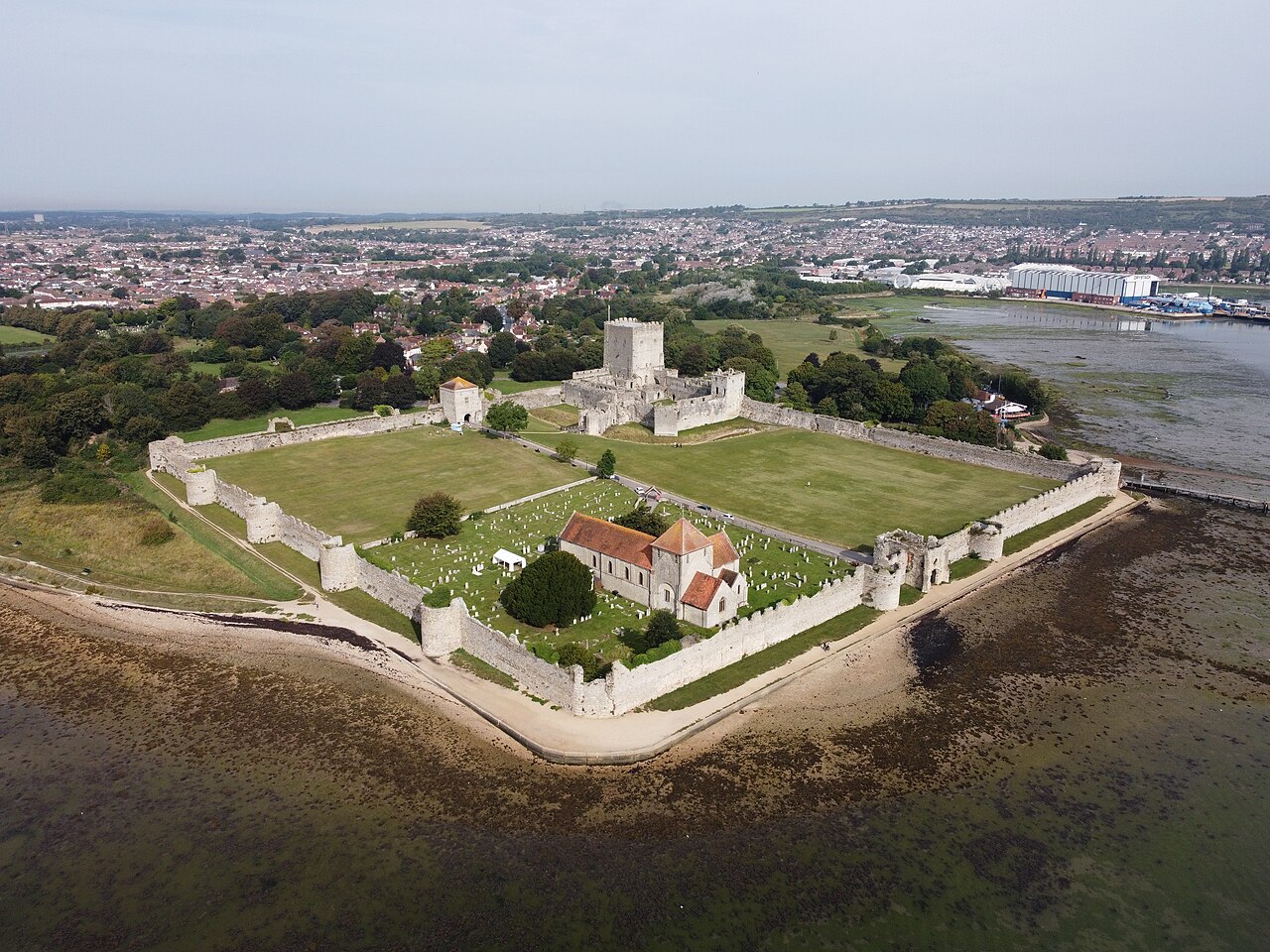
Just up the harbour from Pompey sits one of the most remarkable buildings in the whole country. Portchester Castle has Roman walls that have stood for over 1,700 years, a Norman keep you can climb, a royal palace, a medieval priory church and a story that takes in Henry V, Napoleonic prisoners of war and more.
Here’s my guide to its history, and everything you need to know for a visit.
A Roman fort on Portsmouth Harbour
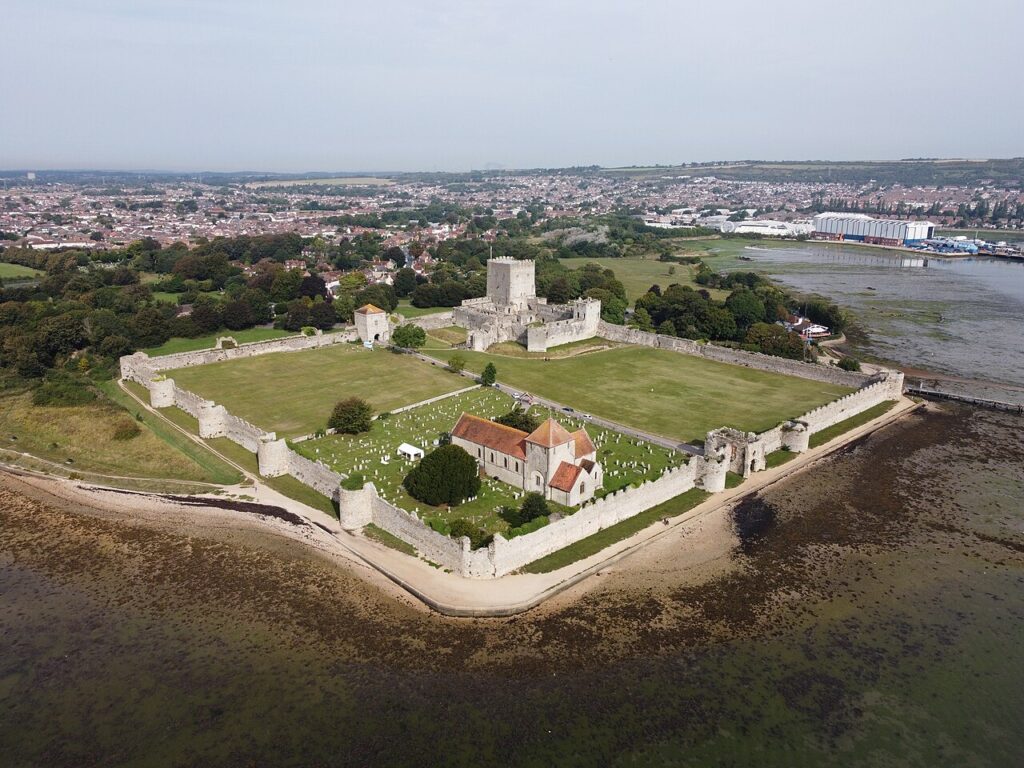
The story starts in the late 3rd century. Around AD 285 to 290, the Romans built a huge fort here at the top of the harbour, possibly under Carausius, a commander who went on to declare himself emperor of Britain. It was one of the Saxon Shore forts, a chain of defences along the south and east coasts.
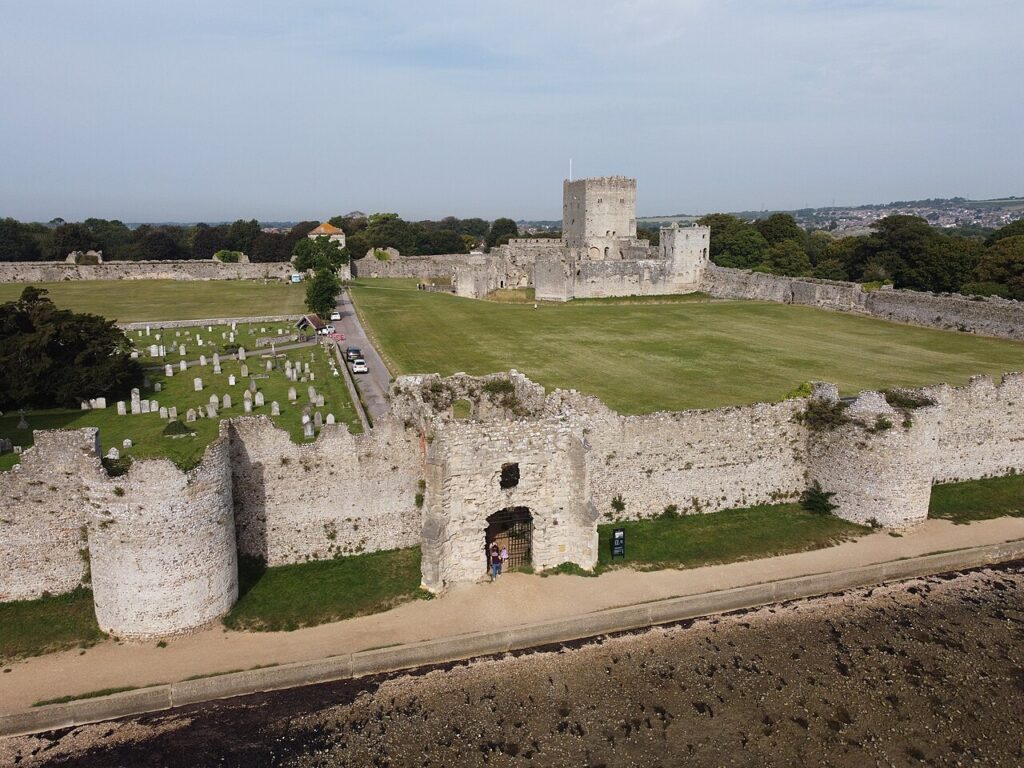
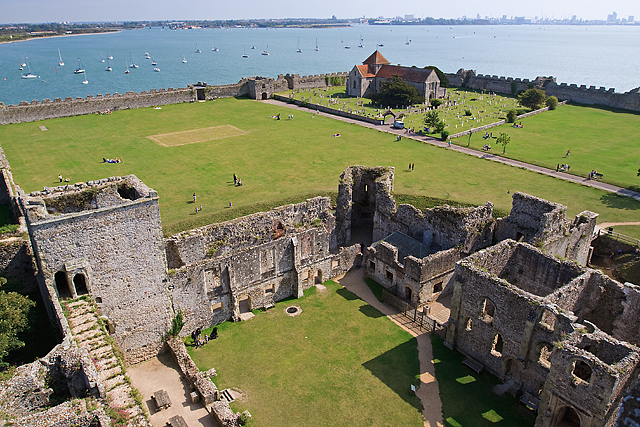
What makes it so special is how much of it survives. The walls still stand around 6 metres high (the upper parts were rebuilt in the Middle Ages), and 16 of the original 20 D-shaped towers are still there. English Heritage calls it the best preserved Roman fort north of the Alps, and when you walk the full circuit of the walls you can see why.
Saxons, Normans and a mighty keep
After the Romans left, the walls kept on being useful. In 904 the site became a burh, a fortified Saxon settlement, under Edward the Elder.
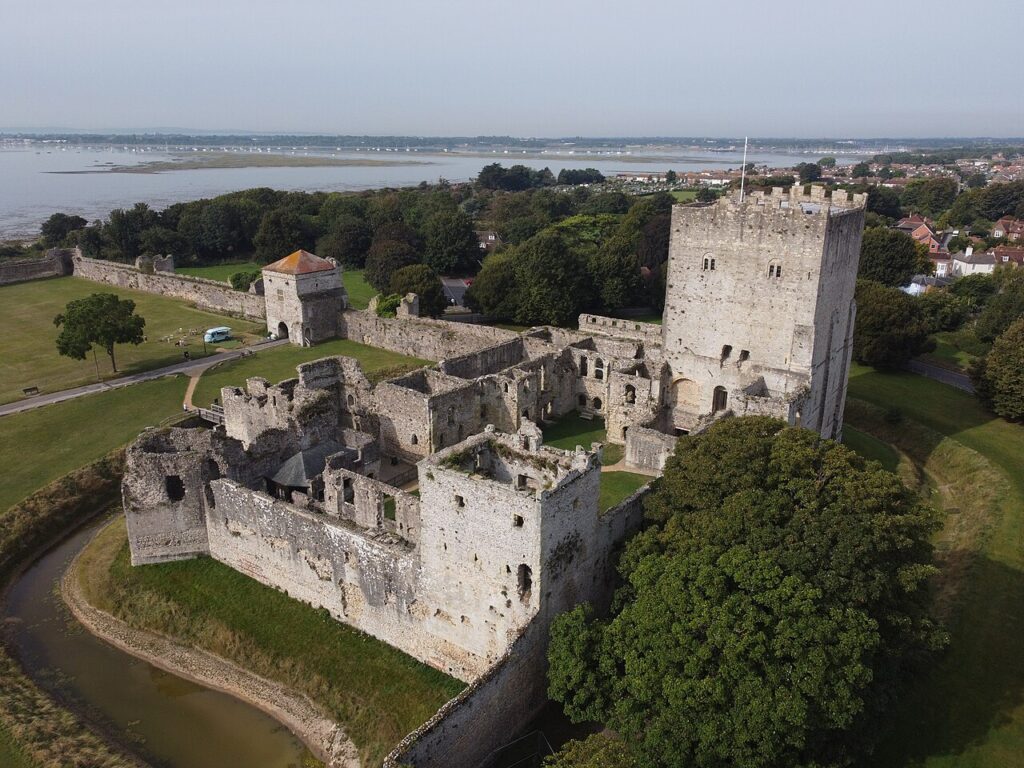
After the Norman Conquest, William Mauduit laid out an inner bailey in one corner of the Roman fort by around 1100, with a stone keep at its heart. The keep grew over the years and now stands more than 30 metres tall, with its top raised in the 1320s.
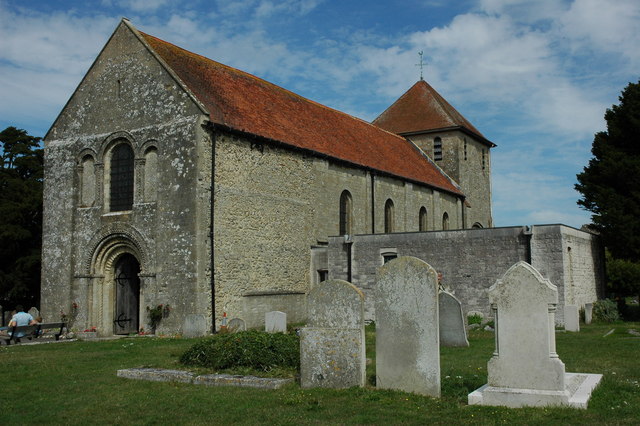
In 1128 an Augustinian priory was founded inside the walls. The monks soon moved on, but their church, St Mary’s, built in the 1130s, is still standing and still used today.
A royal castle: Richard II and Henry V
From 1154 to 1632 Portchester Castle belonged to the Crown. Kings used it as a base on the south coast, and between 1396 and 1399 Richard II built a palace inside the inner bailey. You can still walk through its ruins today.
Its most dramatic moment came in July 1415. Henry V was gathering his army at Portchester to invade France when he uncovered the Southampton Plot, a conspiracy to overthrow him. The plotters were dealt with, Henry sailed, and on 25th October that year he won the Battle of Agincourt.
In 1632 the castle was sold to Sir William Uvedale, and it has stayed in private hands ever since. It’s still owned by the Thistlethwayte family today.
Prisoners of war at Portchester
This is a part of Portchester Castle history I didn’t know much about. For over a century, the castle was used as a prison. Around 500 Dutch prisoners were held here in 1665, and during the wars with France from 1793 to 1815 there could be up to 8,000 prisoners at a time.
In 1796 around 2,000 prisoners, most of them Black and mixed race soldiers captured in the Caribbean, were brought here. The French prisoners even built a theatre in one of the rooms of the keep. The last prisoners left in May 1814.
Into the care of the nation
In 1926 the castle was placed in the guardianship of the Ministry of Works, and English Heritage has looked after it since 1984. Between 1961 and 1979 the archaeologist Barry Cunliffe led major excavations here, which taught us a huge amount about life inside the walls from Roman times onwards.
Visiting Portchester Castle
A visit is a great half day out, whatever your age. Here’s what to expect:
- The keep: climb to the top for brilliant views over the castle, the harbour and Portsmouth.
- The exhibition: on the ground floor of the keep, telling the castle’s story through the ages.
- The outer bailey: over nine acres of grass inside the Roman walls, perfect for a picnic or a kickabout.
- St Mary’s Church: still a working church, so it isn’t part of English Heritage’s site, but it’s well worth a look.
- Dogs: welcome on leads.
There’s a shop selling snacks and drinks, but no café, and the toilets are in the car park rather than inside the castle. The car park is charged and about 200 metres away. Tickets are free for English Heritage members, and you can save 15% by booking online in advance. Opening times change through the year, so check the English Heritage website before you go.
Make a day of it with a walk up the hill afterwards, with help from my Portsdown Hill walks guide. And if you love Pompey’s castles, don’t miss my Southsea Castle history, Henry VIII’s fort on the seafront.
Why Portchester is a must visit
Very few places let you stand inside walls built by the Romans, under a keep built by the Normans, in a palace built for a king. Portchester Castle is right on our doorstep, and the views across the harbour on a sunny day are something else. Keep an eye on my What’s On Pompey calendar for events at the castle 💙⚓
Sources: English Heritage: History, English Heritage: Facilities, English Heritage: Prices and opening times, Visit Portsmouth and Wikipedia.