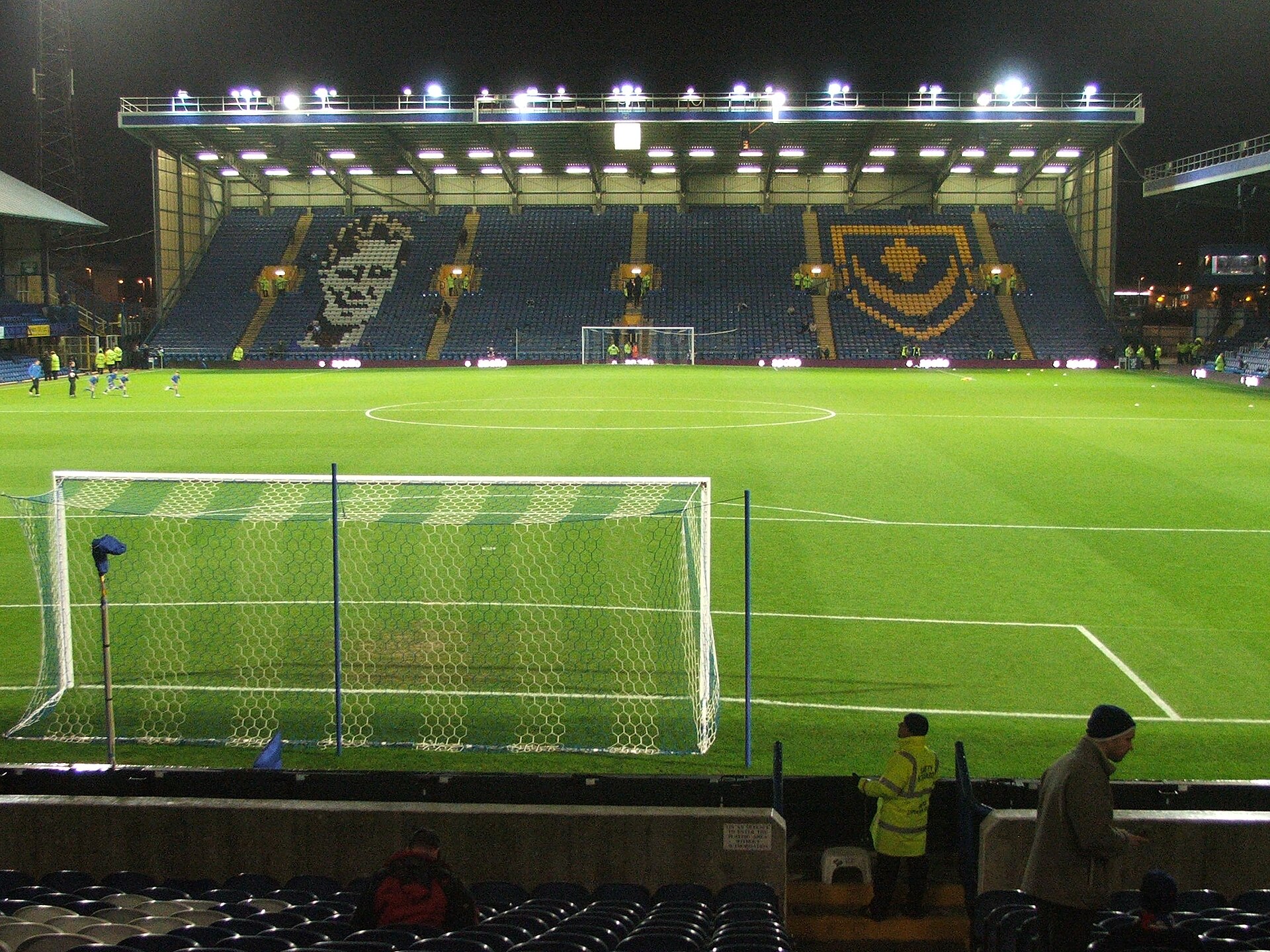
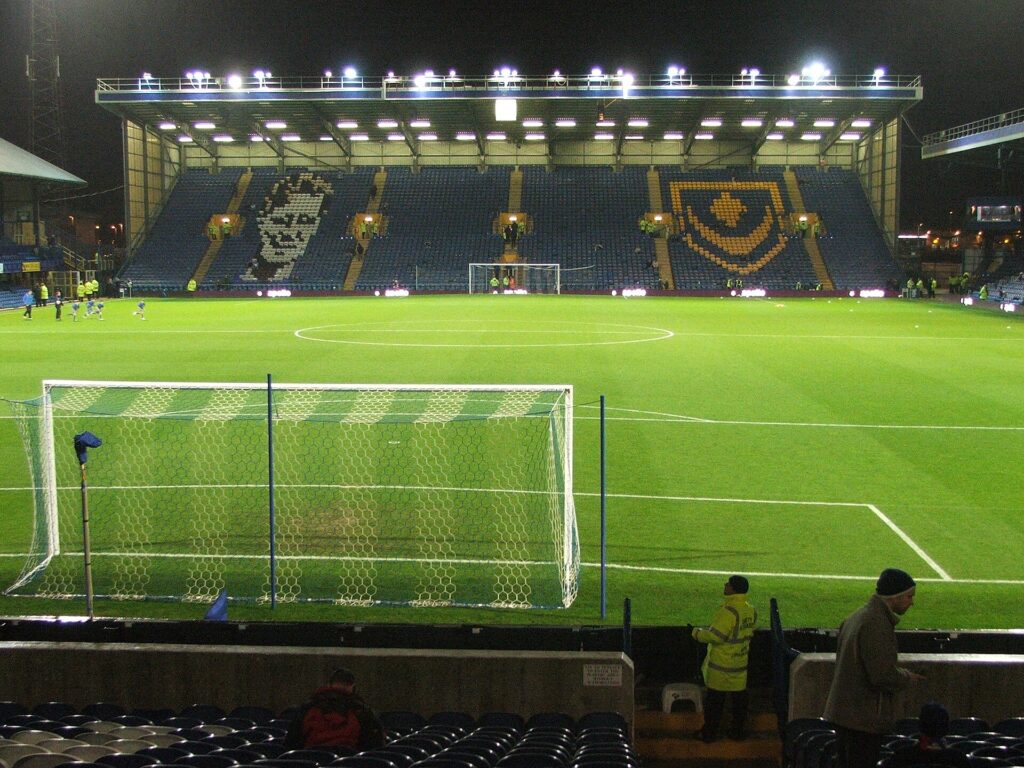
For Pompey fans, there’s nowhere like it. The mock-Tudor entrance, the Fratton End in full voice, the Pompey Chimes ringing round the ground. But Fratton Park history goes back further than most people realise, all the way to a potato field in 1898. Here’s the story of our home, from the very first game to the rebuild happening today.
From a potato field to a football ground
Portsmouth Football Club was formed in April 1898. The new company bought about four and a half acres of market garden land off Goldsmith Avenue in Milton, from the Goldsmith family.
The land still had a crop of potatoes in it, so the directors sold them to add a bit to the club’s funds. That’s right: some of the first money Pompey ever made came from spuds.
The ground was officially opened on 15th August 1899. A few weeks later, in September 1899, Pompey played their first match there, a friendly against Southampton. We won 2-0, with goals from Dan Cunliffe and Harold Clarke. A perfect start, if I say so myself.
Why is it called Fratton Park?
Here’s a pub quiz fact for you: Fratton Park isn’t actually in Fratton. It’s in Milton. The ground was named after Fratton railway station, the nearest station, which is about a mile’s walk away. Handy for the away fans, at least.
The famous mock-Tudor entrance
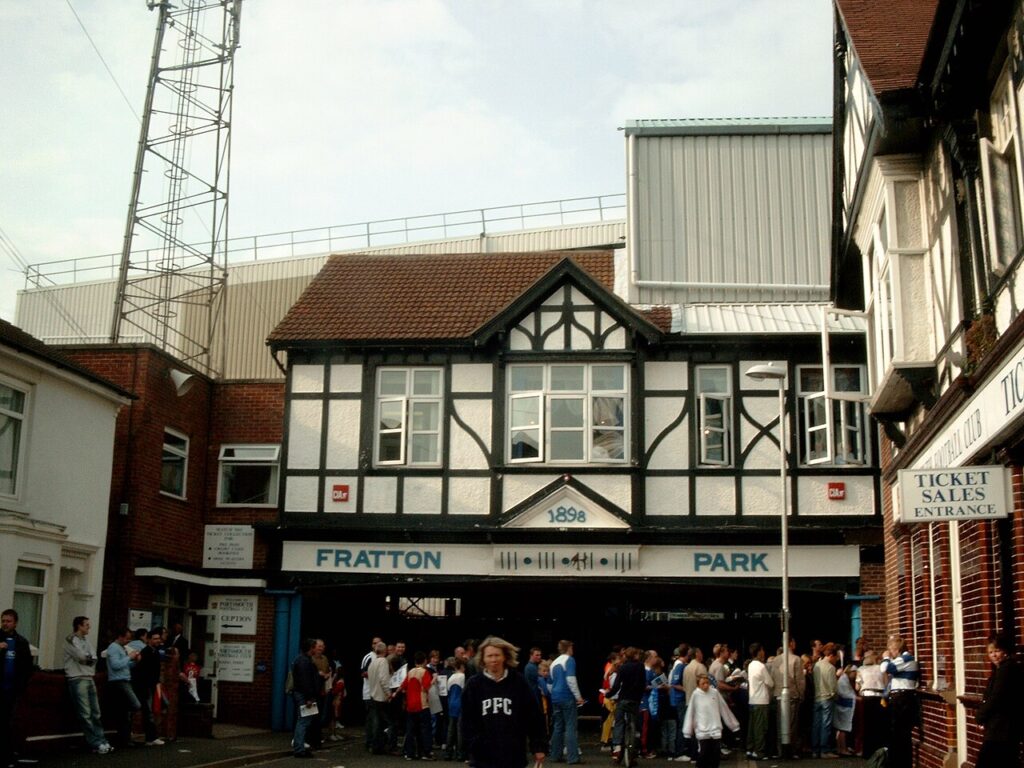
That black and white building on Frogmore Road is one of the most recognisable entrances in English football. The mock-Tudor pavilion was built in 1905, a gift from local brewer Sir John Brickwood, and designed by Major Alfred H. Bone. It originally had an octagonal clock tower on top, which came down in 1925 to make way for the new South Stand.
Archibald Leitch builds the stands
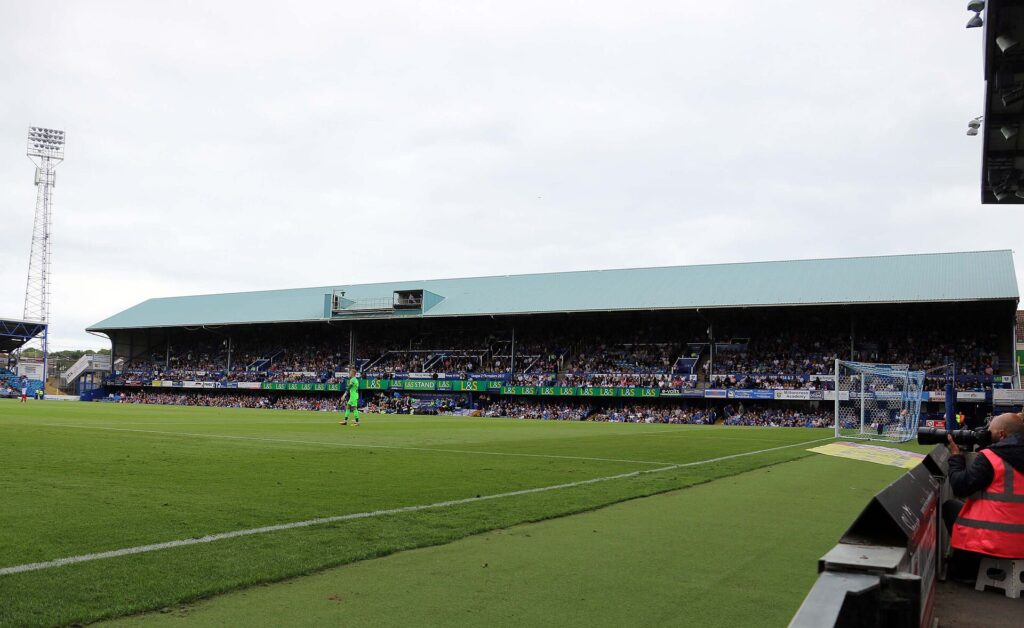
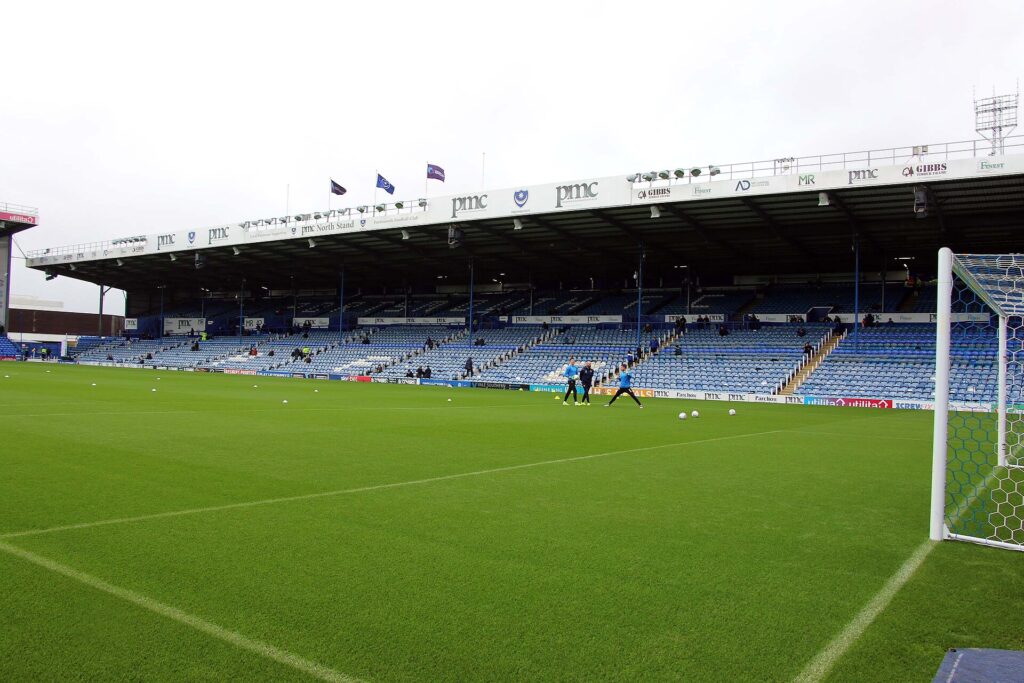
One of the biggest names in Fratton Park history arrived in the 1920s and 30s, when Pompey brought in Archibald Leitch, the most famous football ground designer of his day. The new South Stand took about ten weeks to build, cost £20,000 and opened on 29th August 1925. Its roof truss design is thought to be the oldest surviving example of its kind in the UK.
Leitch also designed the North Stand, which opened on 7th September 1935 ahead of a match against Aston Villa. These days it’s the biggest stand in the ground, with two tiers.
The golden years and a record crowd
Fratton Park saw its greatest days either side of the Second World War. Pompey won the FA Cup in 1939 and, because the war stopped the competition, held on to the trophy for years. Then came back-to-back league titles in 1949 and 1950, with the legendary Jimmy Dickinson in the side.
The biggest crowd ever at Fratton Park came during that era. On 26th February 1949, 51,385 people squeezed in to watch Pompey beat Derby County 2-1 in the FA Cup quarter-final. Imagine that, in a ground that holds around 20,000 today.
Fratton Park history under the floodlights
Here’s something every Pompey fan should know. Floodlights were fitted to the North and South stands in February 1956, and on 22nd February 1956 Fratton Park hosted the first ever First Division match played under floodlights. Sadly we lost 2-0 to Newcastle United, but it’s still a bit of football history that belongs to us.
The four tall corner pylons went up in 1962 and became part of the skyline for decades, until they were taken down between 2019 and 2020.
The Fratton End
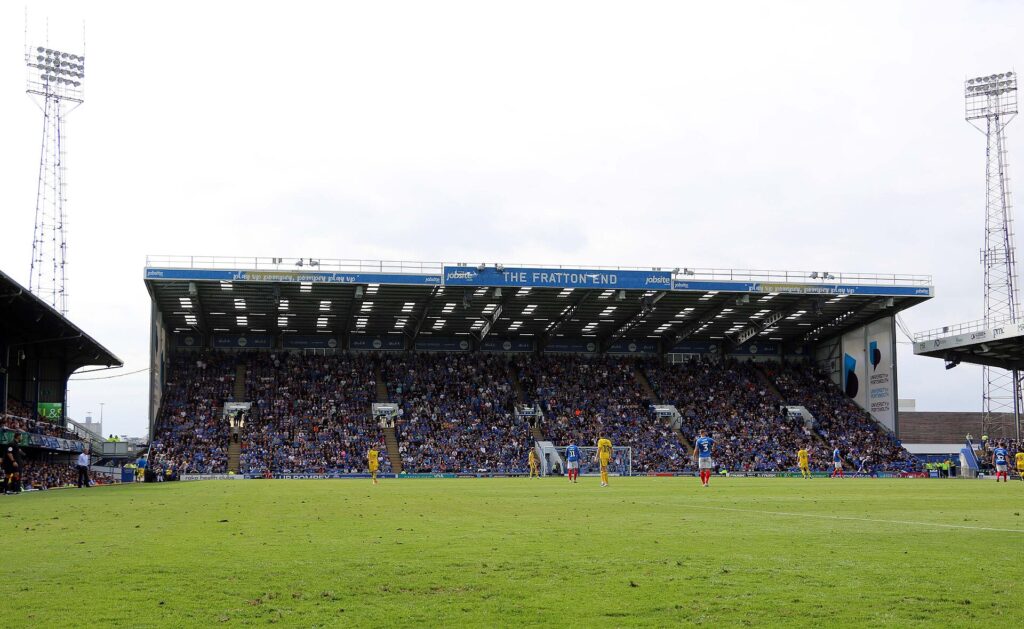
The old Fratton End, a two-tier terrace built in 1956, didn’t age well. Salt in the concrete corroded its reinforcements, and around 30 years later its upper tier was condemned.
The new Fratton End was famously finished just in time: it opened on 31st October 1997 at 4:59pm, one minute before the deadline. It’s been the loudest part of the ground ever since, and in August 2023 safe standing was added.
The Milton End
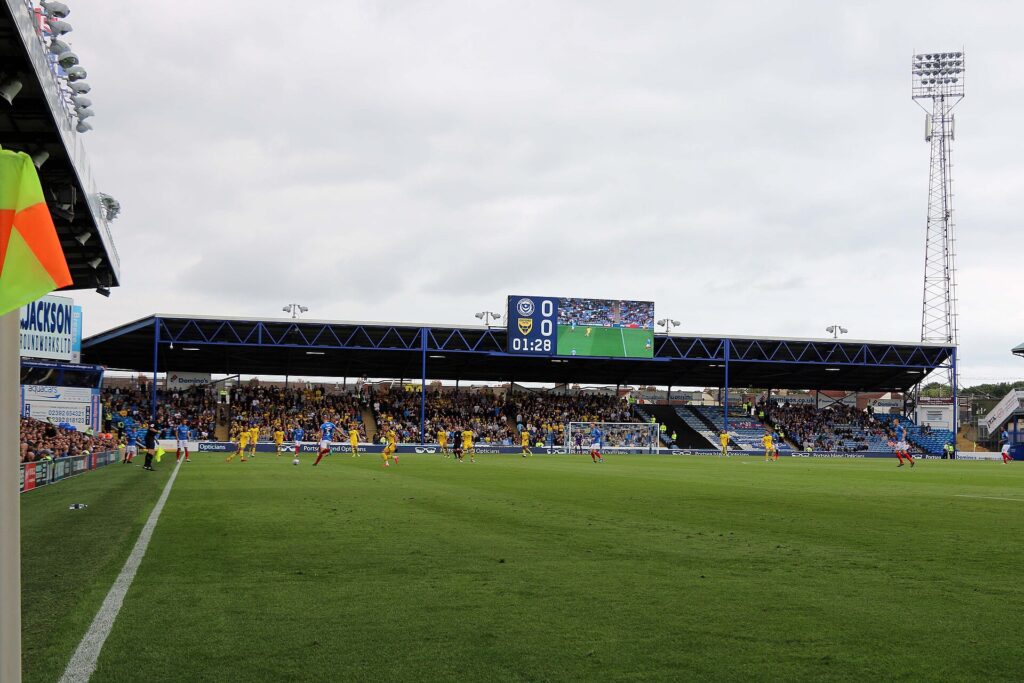
At the other end of the ground is the Milton End, which was originally known as the Spion Kop. It’s traditionally where the away fans go, and it’s been at the heart of the club’s recent rebuild.
Saving the ground and the rebuild
After some very tough years off the pitch, the fans took over the club in 2013 through the Pompey Supporters’ Trust, and Michael Eisner’s ownership from 2017 brought big investment into the ground.
Since 2020 there’s been a major regeneration. The North Stand got a new roof and cladding, the lower seats were replaced and more wheelchair spaces were added. In 2022 the South Stand was turned into a single tier, revealing Leitch’s original design again, and work began on the Milton End. It’s brilliant to see the old girl being looked after properly.
The Jimmy Dickinson statue
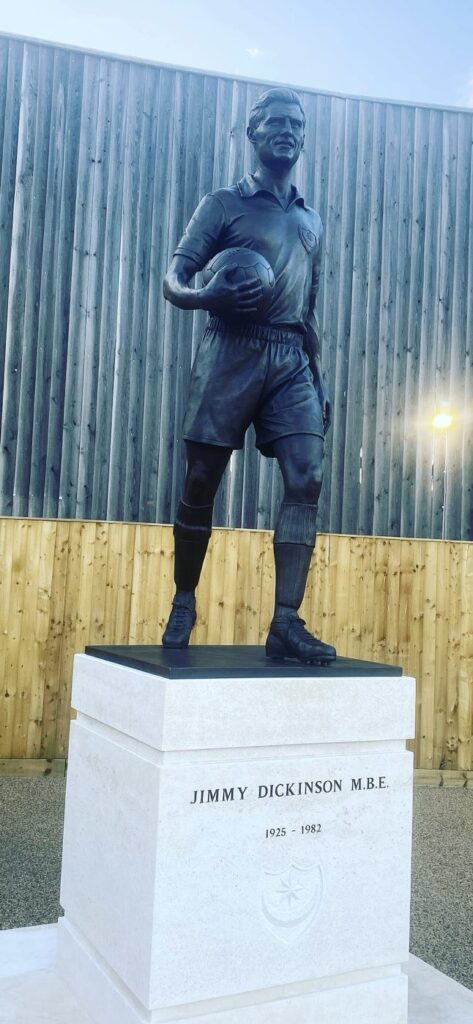
On 23rd September 2023, a bronze statue of Jimmy Dickinson was unveiled outside the ground. It was commissioned by the Pompey Supporters’ Trust and paid for by the fans, which says it all about this club. Read more about the man himself in my Jimmy Dickinson article.
More than a football ground
That’s Fratton Park history in a nutshell, but numbers and dates don’t really capture it. It’s the place where generations of Pompey families have sung the Chimes, celebrated, despaired and celebrated again. I’ve been Pompey through and through since day one.
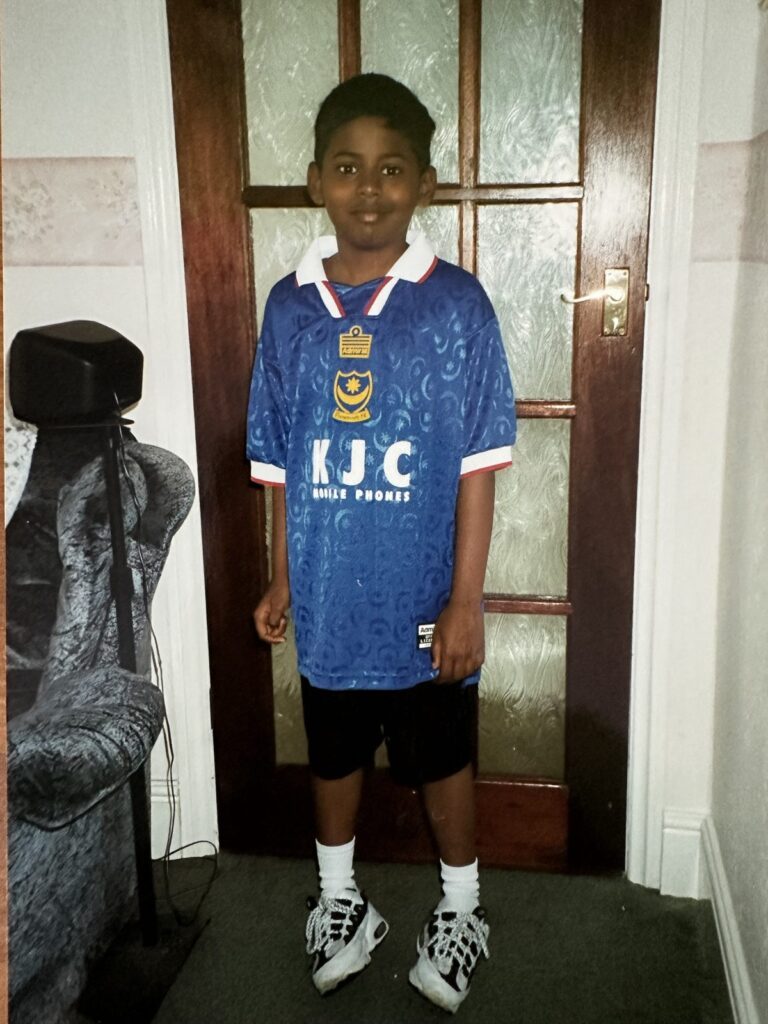
If you’re new to the club or the city, brush up with my guides to Pompey slang and why Portsmouth is called Pompey. Play up Pompey 💙⚓
Sources: Wikipedia: Fratton Park and When Saturday Comes: Celebrating Portsmouth’s Fratton Park.