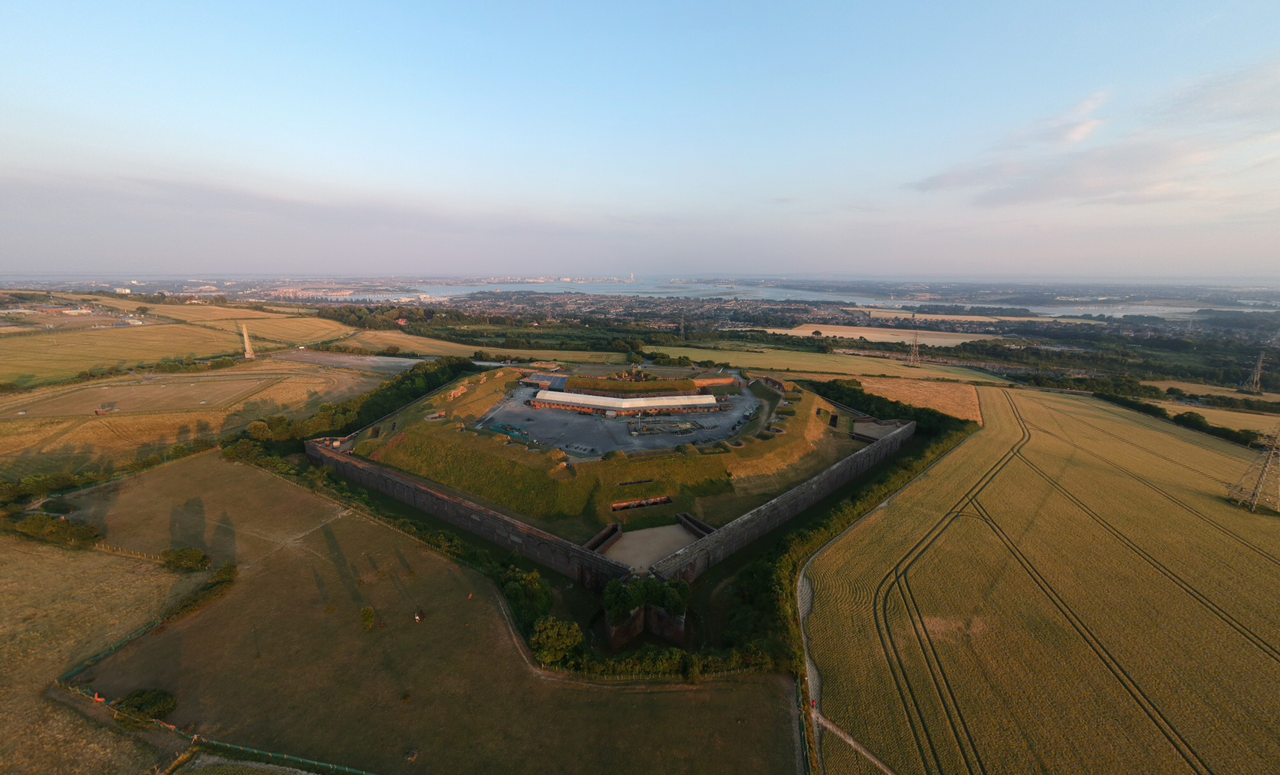
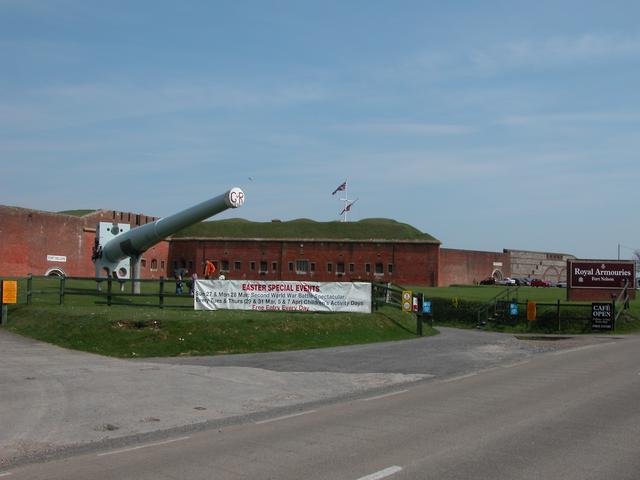
Up on Portsdown Hill, with the whole of Pompey spread out below, sits one of the best free days out in the area. Fort Nelson is a huge Victorian fort that never fired a shot at an invader, and today it’s home to the Royal Armouries’ collection of big guns, from medieval cannon to part of a real life supergun.
Here’s the story of the fort and everything you need to know before you visit.
Why was the fort built?
In the mid 1800s, Britain was worried. France was rebuilding its military under Napoleon III, the Crimean War of 1854 to 1856 had just ended, and Portsmouth’s Royal Dockyard was the jewel in the Navy’s crown. If an enemy landed along the coast and attacked from the land, the city would be in real trouble.
So Prime Minister Lord Palmerston set up a Royal Commission to look at the country’s defences, with Portsmouth as the priority. The Royal Armouries says it led to “the greatest works of fortification yet undertaken in this country in peacetime”.
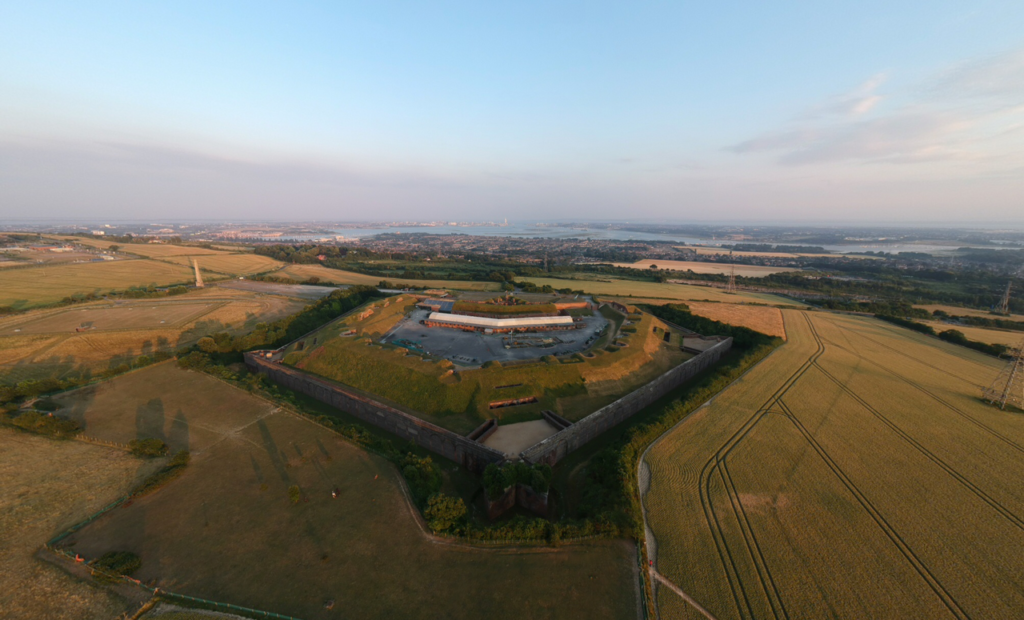
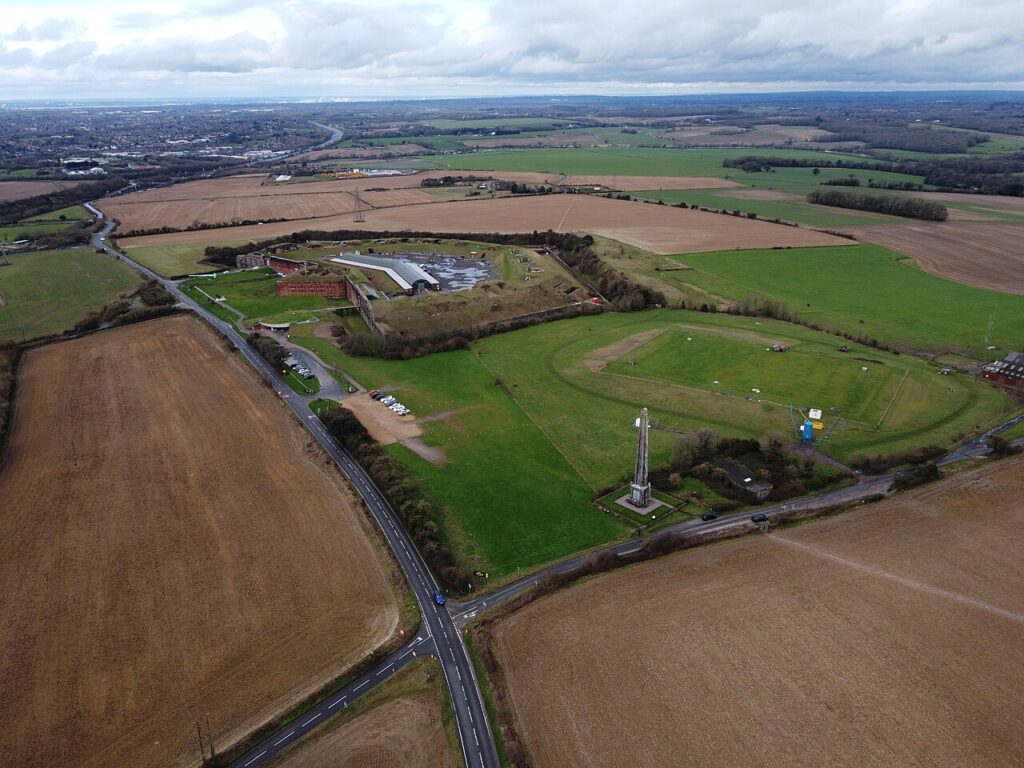
Fort Nelson was one of five forts built along Portsdown Hill to protect the Dockyard. The Royal Engineers marked it out in the summer of 1860, and it was largely complete by the late 1860s. It takes its name from the Nelson Monument right next door, put up to remember Lord Nelson and Trafalgar.
Palmerston’s Follies
The forts soon got a nickname: Palmerston’s Follies. Partly that’s because their guns point inland, away from the sea, which confused plenty of people. And partly it’s because the threat never came. France was defeated by Prussia in 1870, before the forts were even finished, and the Royal Armouries says the fort was never used against an invader.
That doesn’t mean it sat empty. In the late 1800s, big military manoeuvres were held here, drawing crowds from the town to watch.
A six-sided fortress
It’s a polygonal fort, six-sided, with a deep ditch around it covered by three caponiers, which are defensive positions built into the ditch. Its ramparts were armed with heavy guns and howitzers, and Wikipedia notes that it wasn’t fully armed until the 1890s.
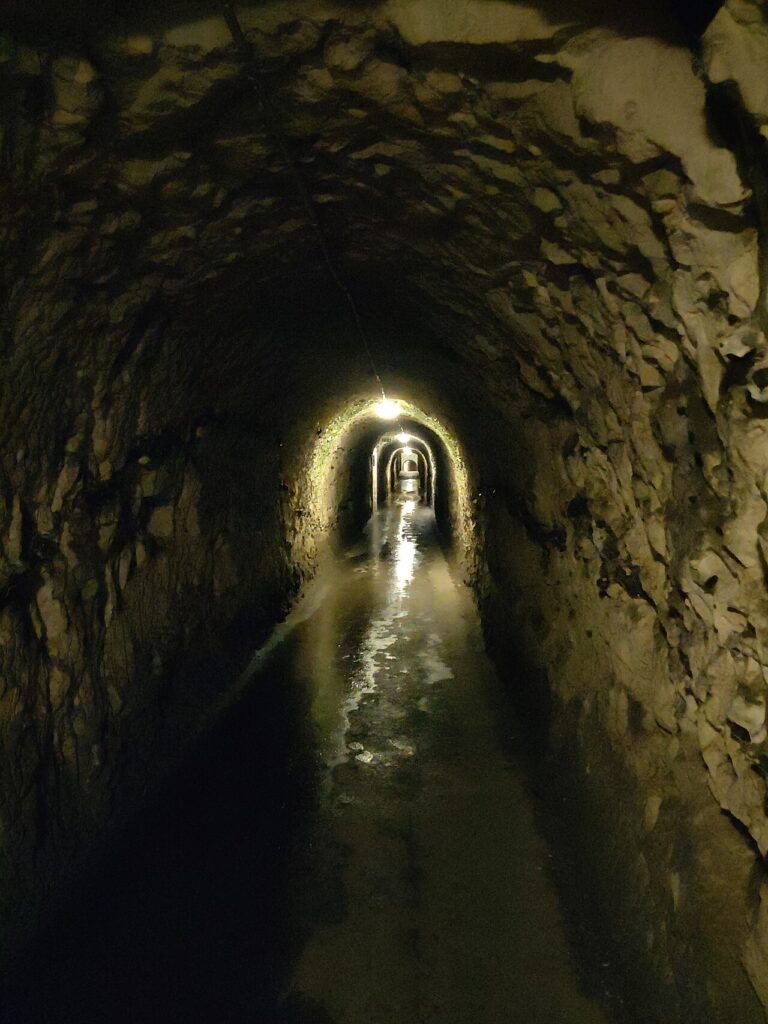
One of my favourite bits of any visit is heading underground. Tunnels link the magazines, where the gunpowder and shells were stored, with the gun positions, and walking through them really gives you a sense of the scale of the place.
From ammunition store to museum
The fort’s working life carried on long after the guns left:
- 1907: the fort was disarmed and used for accommodation.
- 1938: it became an anti-aircraft ammunition store, with ten large magazines built on the parade ground.
- 1950s: it was abandoned and fell into years of neglect and vandalism.
- 1979: Hampshire County Council bought it for £50,000.
- 1994: it opened to the public, and in 1995 it became part of the Royal Armouries.
What’s at the fort today
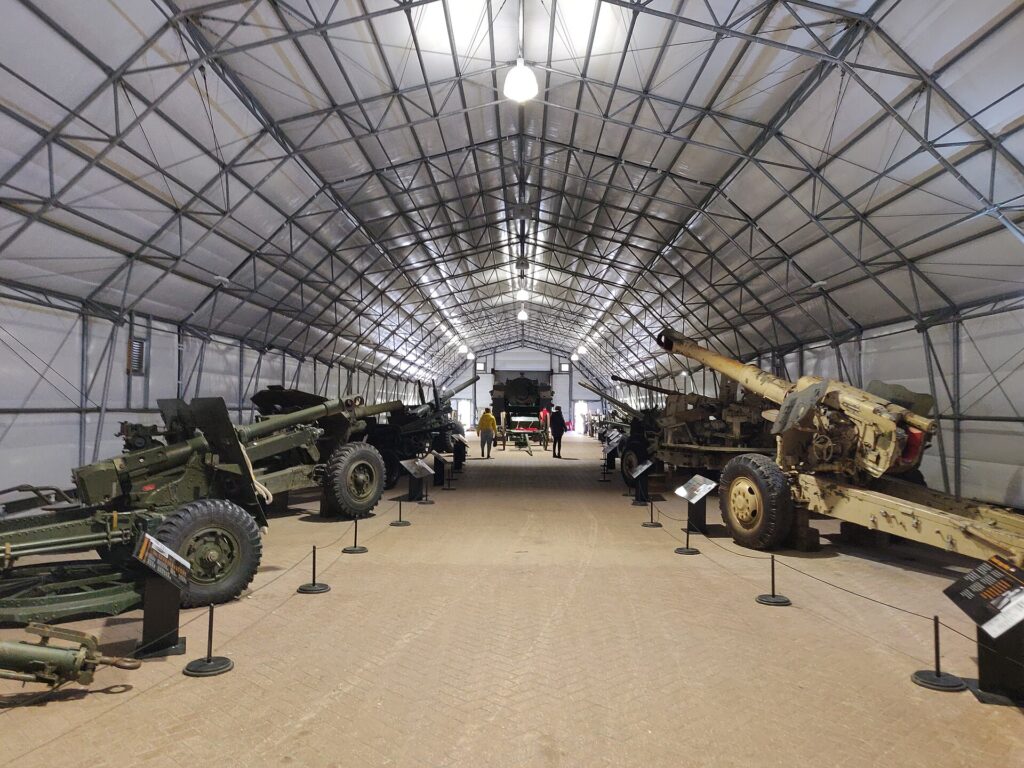
Today the fort is the Royal Armouries’ home for artillery, with over 700 pieces from around the world spanning about six centuries. Highlights include:
- The Dardanelles Gun: a massive Ottoman bronze cannon cast in 1464.
- Mallet’s Mortar: one of only two ever made, a giant Victorian experiment.
- The Iraqi supergun: parts of the Project Babylon supergun, one of the strangest stories in modern weapons history.
- A railway howitzer weighing around 200 tonnes.
- French field guns from Waterloo.
The guns are spread across the galleries, the parade ground and the tunnels on a 19-acre site, so wear comfy shoes.
Visiting Fort Nelson
The best news of all: entry is free. Here’s what to know before you go:
- Opening times: Visit Portsmouth says it’s open Tuesday to Sunday in term time and every day in the school holidays and on bank holidays, from 10am to 5pm between April and October and 10am to 4pm from November to March. Check the Royal Armouries website before you go, as you may need to book a free ticket.
- The café: grab a drink with panoramic views over the Solent.
- Events: the fort runs special events through the year, some of which have a charge.
- Kids: they’ll love the tunnels, the ramparts and the sheer size of the guns.
Make a day of it on Portsdown Hill
Fort Nelson is right on Portsdown Hill, so it’s easy to pair with a walk and the best view in the city. My Portsdown Hill walks guide covers the routes, the other forts along the ridge and where to park. History fans should also head down to Portchester Castle, just below the hill, or over to the Hilsea Lines, another set of Victorian defences.
For more family days out, see my guide to things to do in Portsmouth with kids, and for even more ideas, my guide to things to do in Portsmouth.
Why it’s worth the trip
It’s free, it’s fascinating and the views are incredible. Where else can you see a cannon cast in 1464, a piece of a supergun and the whole of Pompey in one afternoon? Fort Nelson is one of our area’s best kept secrets, and I’d tell anyone to go 💙⚓
Sources: Royal Armouries: history, Visit Portsmouth and Wikipedia.