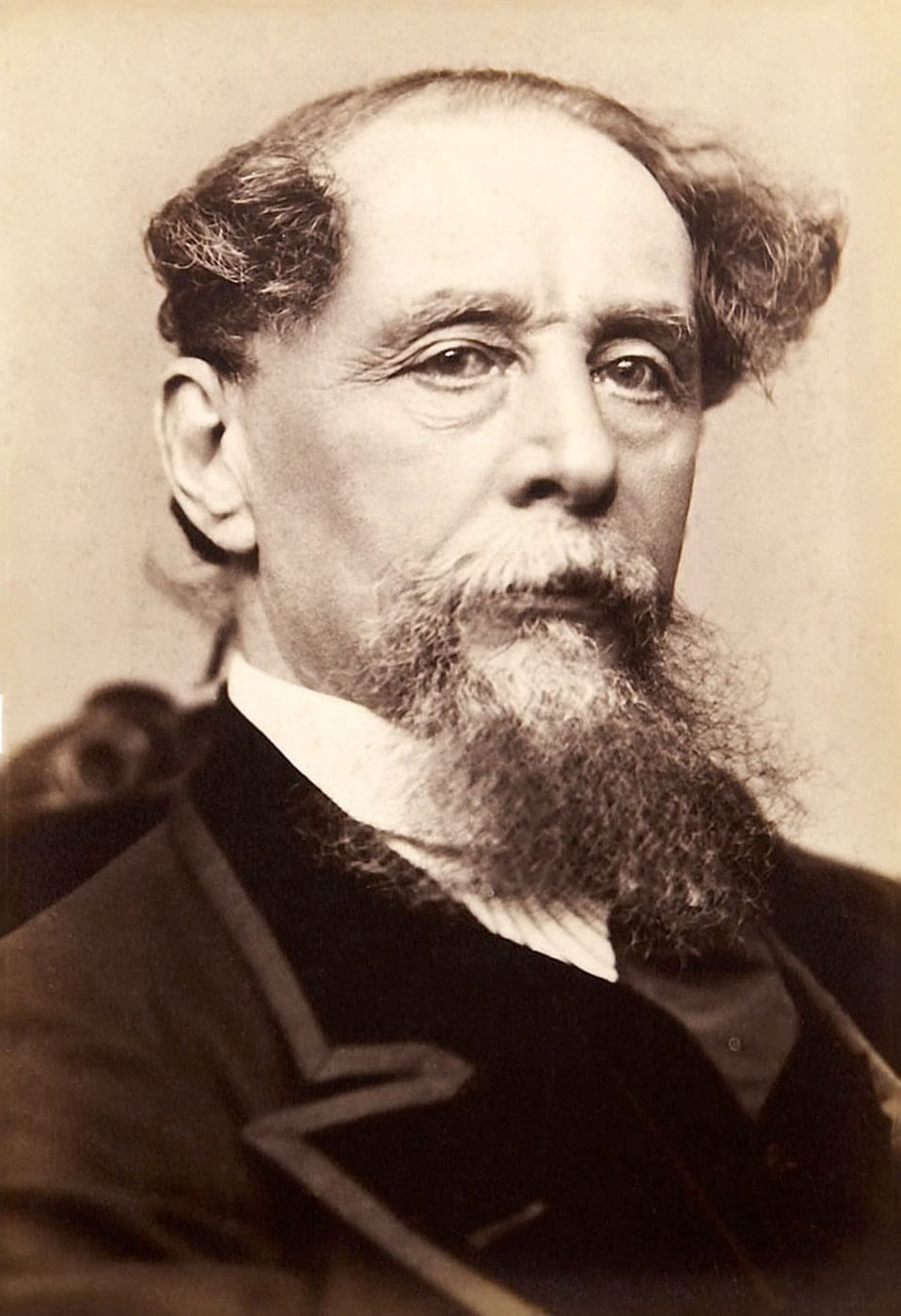
Ask most people where Charles Dickens comes from and they will say London. Wrong, mush. The man who gave us Scrooge, Oliver Twist and Pip was a Pompey boy, born right here in Landport. The Charles Dickens Portsmouth story is one of our city’s best-kept secrets, so grab a cuppa and let me walk you through it, from the little house where he was born to a bronze statue outside the Guildhall.
Born in Landport, February 1812
Charles Dickens arrived on 7 February 1812, in a modest terraced house on what was then called Mile End Terrace. Today that road is Old Commercial Road, and the house is number 393. Britain was still at war with Napoleon, and Pompey was heaving with sailors.
There is a lovely local legend attached to his birth too. According to the Dickens Trail produced by the Birthplace Museum, his mum Elizabeth is said to have gone to a dance at the Beneficial Hall in Kent Street the night before, and young Charles turned up the following morning. I reckon that explains his flair for drama.
He was baptised on 4 March 1812 at St Mary’s in Fratton, in the old Norman church that stood there before the current building went up in the late 1880s. The font from that baptism now lives at St Alban’s Church in Copnor.
Dad, the Navy Pay Office and a lot of moving house
His father, John Dickens, was a clerk in the Navy Pay Office in the dockyard. John brought his new wife Elizabeth down to Portsmouth in the summer of 1809, and the Old Commercial Road house was their first home together.
John was not exactly brilliant with money, and Charles later borrowed his dad’s habits for the hopeless but lovable Mr Micawber in David Copperfield. The family did not sit still for long either:
- June 1812: just a few months after Charles was born, they moved to 16 Hawke Street in Portsea. The house is long gone, but there is a plaque on The George pub on the corner of Hawke Street and Queen Street.
- Christmas 1813: they settled at 38 Wish Street in Southsea, which we now know as Kings Road. Sadly his baby brother Alfred died there.
- Around a year later: John’s job was moved to London, and the family packed up. They later moved on to Chatham in Kent.
So Charles spent less than three years here. Still, once a Pompey boy, always a Pompey boy.
Charles Dickens Portsmouth links in Nicholas Nickleby and later visits
Dickens never forgot us. He came back in 1838 while working on Nicholas Nickleby, and his biographer John Forster recorded that he recognised the spot where he had watched soldiers parading as a tiny child. Not bad for someone who left before his third birthday.
In the novel, Nicholas and Smike end up in Portsmouth and find cheap lodgings above a tobacconist on The Hard, right by the dockyard gate. They fall in with Vincent Crummles and his theatre company, and that theatre was inspired by the old Portsmouth Theatre on the High Street in Old Portsmouth, which closed in 1854.
He returned as a famous man for his public reading tours, performing at St George’s Hall in Portsea in November 1858 and again in May 1866. He also wrote a piece about the town and was a bit sniffy about how the naval growth had changed it, though he did admire the smart new terraces going up in Southsea.
Inside the Charles Dickens Birthplace Museum
The house on Old Commercial Road is now run by Portsmouth City Council as the Charles Dickens Birthplace Museum, and it is a proper little gem, and the obvious first stop on any Charles Dickens Portsmouth visit. Inside you will find:
- The bedroom where he was born, plus the parlour, dining room and kitchen, all dressed in Regency style. The kitchen dresser is an original fitting.
- The couch Dickens died on at Gad’s Hill Place in Kent on 9 June 1870, given to the museum in 1909 by his sister-in-law Georgina Hogarth.
- Two bentwood chairs from Gad’s Hill, letters and cheques in his own hand, and a watercolour of his mum.
- Illustrations of his characters, including work by Phiz, in an upstairs gallery.
It is not open every day, so plan ahead. The official visit page lists 2026 opening days of 10am to 4.30pm (last entry 4pm) on Thursday 19, Saturday 21, Thursday 26 and Saturday 28 November, then Thursday 3, Saturday 5, Thursday 10, Saturday 12, Thursday 17 and Saturday 19 December. Residents of PO1 to PO6 get in free. Extra days can be added, so do check the official site before you go. If the weather turns, it makes a great pick for a rainy day in Portsmouth.
The statue, the trail and a Dickens day out
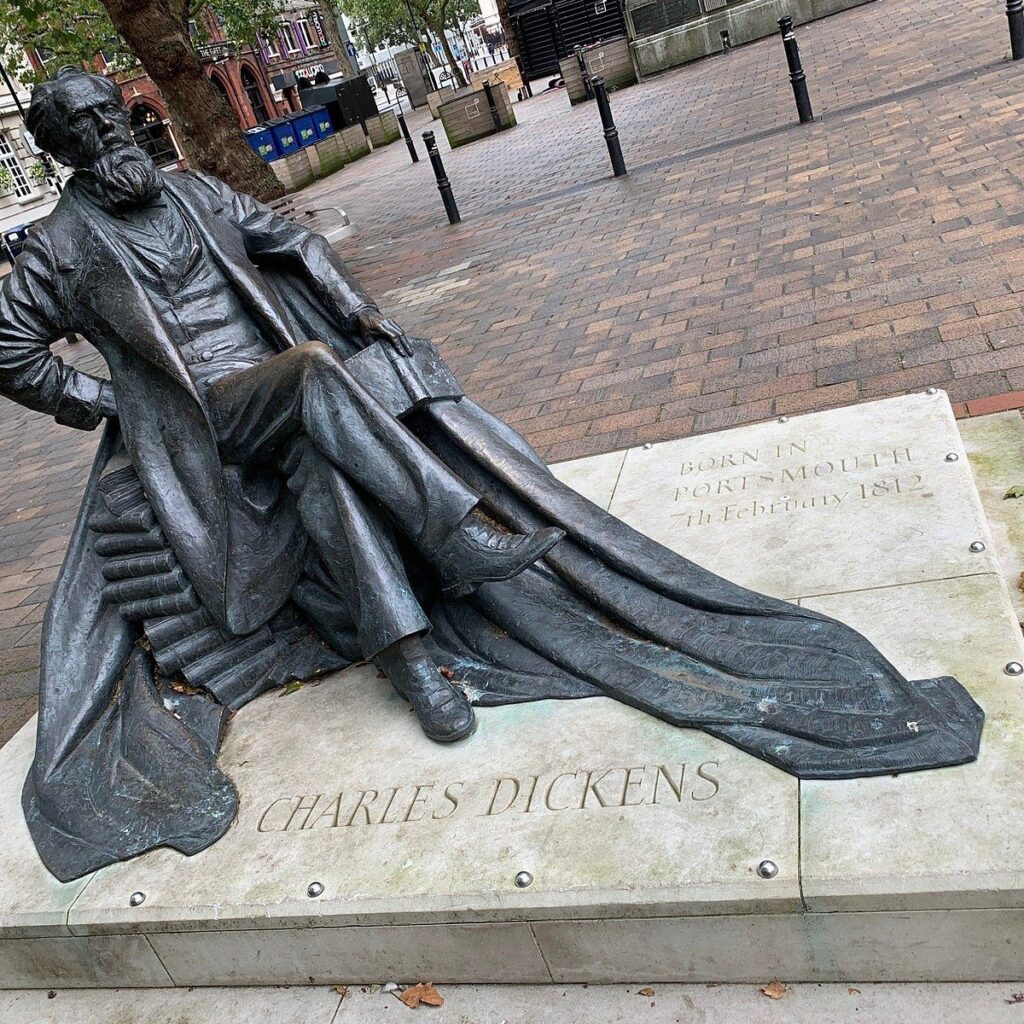
Head into town and you will find him sitting in Guildhall Square. The bronze statue by sculptor Martin Jennings was unveiled in 2014 on what would have been his 202nd birthday, and it was the first full-size statue of Dickens in Britain. He is shown about to stand up and give a reading, open book in hand and a pile of novels beside him. The cheeky twist? Dickens said in his will he did not want any memorials. Sorry, Charlie, we love you too much.
If you want to make a proper Charles Dickens Portsmouth day out of it, the museum’s own Dickens Trail links 14 sites over almost 8 miles. Highlights include:
- The Pay Office in the Historic Dockyard, where John Dickens worked from 1807 to 1814.
- The Hard and the High Street in Old Portsmouth, for the Nickleby connections.
- The John Pounds Memorial Church on the High Street. Pounds taught poor kids for free, and Dickens later backed the Ragged School movement that grew out of work like his.
- Highland Road Cemetery, where Maria Winter, his first love and the model for Dora in David Copperfield, is buried.
Add a few more Portsmouth attractions and you have a weekend sorted.
A Christmas Carol and a very Pompey Christmas
This is the bit I love at this time of year. A Christmas Carol came out in December 1843 and was an instant smash, with the first print run selling out before Christmas Eve. The Charles Dickens Museum in London says it helped make Christmas fashionable again. Visit Portsmouth notes that the book grew out of his campaigning for poor children, which takes you straight back to John Pounds on our High Street.
So when you are tucked up watching the Muppet version for the fortieth time, remember the man behind it took his first breath in Landport. That is the Charles Dickens Portsmouth connection in a nutshell, and it makes a December visit to his birthplace feel extra special. Pair it with my guide to Christmas in Portsmouth and you have got yourself a proper festive day.
Want more Pompey history, events and days out? Check the What’s On calendar, submit an event if you are running something Dickensian, and sign up for Good Morning Dinlos so you never miss a thing. Happy reading, Pompey. 💙⚓
Sources: Charles Dickens’ Birthplace Museum: About the museum; Charles Dickens’ Birthplace Museum: Displays; Charles Dickens’ Birthplace Museum: Visit; The Dickens Trail (Portsmouth Museums); Visit Portsmouth: Charles Dickens and Portsmouth; Martin Jennings: Charles Dickens statue; Britannica: Charles Dickens; Charles Dickens Museum: Dickens at Christmas; History Today: Publication of A Christmas Carol